janet
janetPartnership businesses thrive when two or more parties combine resources, expertise, and networks to achieve outcomes none could reach alone. From urban farms linking with local restaurants to share harvest risk and guarantee fresh produce, to community gardens partnering with schools to teach sustainable agriculture while creating green spaces, these collaborations prove that shared investment often yields stronger results than solo ventures. The model works because each partner brings distinct strengths to the table: one might offer land or equipment, another provides technical knowledge or customer access, and together they split both the financial burden and the rewards.
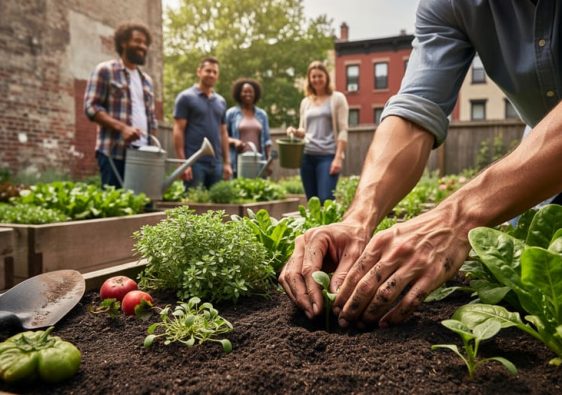
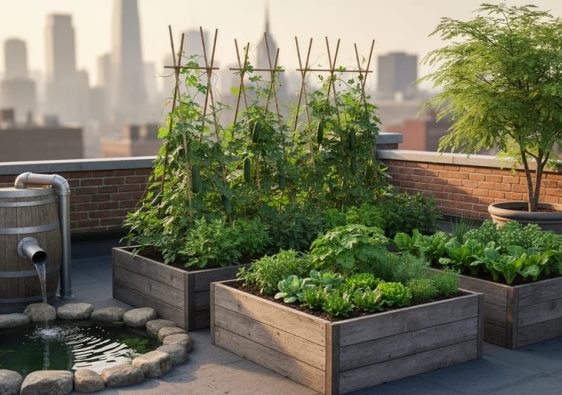
Real-world examples show the breadth of possibility. A rooftop garden operation might partner with a building owner who provides space in exchange for reduced cooling costs and tenant amenities. A composting social enterprise could team with city waste management to divert organic material while creating jobs. Even micro-level collaborations matter: two neighbors sharing tools, seeds, and labor to maintain adjacent plots demonstrate partnership principles at the smallest scale.
These arrangements work best when roles are clear, goals align, and both parties see tangible benefit. The urban farming movement has proven particularly fertile ground for partnerships because the barriers to entry (land access, startup costs, distribution channels) often exceed what one person or organization can handle alone. Community-focused ventures especially benefit from this model, turning individual limitations into collective strength while building resilience through diversified skills and shared risk.
The examples ahead illustrate how different partnership structures address specific challenges, create measurable community impact, and offer blueprints you can adapt to your own neighborhood or business context.
Why Local Partnerships Matter in Urban Agriculture
Urban farms don’t thrive in isolation, they flourish when woven into the fabric of their neighborhoods. When a rooftop garden partners with the bakery downstairs or a community plot teams up with the corner grocery, something powerful happens: resources flow more freely, risks spread across multiple shoulders, and credibility multiplies through trusted local networks.
Resource sharing sits at the heart of successful partnerships. A restaurant might provide kitchen scraps for compost while receiving first pick of heirloom tomatoes. A hardware store could donate tools and space for workshops in exchange for featuring the farm’s story in their marketing. These exchanges turn potential expenses into mutual benefits, making solutions for urban agriculture more financially sustainable for everyone involved.
Community credibility matters just as much as cash flow. When established businesses champion an urban farm, they lend their reputation and customer base to the cause. A café promoting its partnership with a neighborhood garden doesn’t just sell salads, it tells a story locals can see, taste, and trust. That visibility attracts volunteers, donors, and additional partners who want to join something real and rooted.
Perhaps most significantly, partnerships build resilient local food systems that can weather disruptions. During supply chain hiccups, restaurants with farm relationships maintain access to fresh ingredients. When economic pressures mount, diversified partnerships create stable markets and meaningful jobs that keep both farms and businesses viable. These aren’t just feel-good collaborations, they’re practical strategies that strengthen the entire community’s ability to feed itself, employ its residents, and adapt to whatever challenges emerge.
Restaurants and Cafés: Farm-to-Table Partnerships That Nourish Communities
What Makes These Partnerships Work
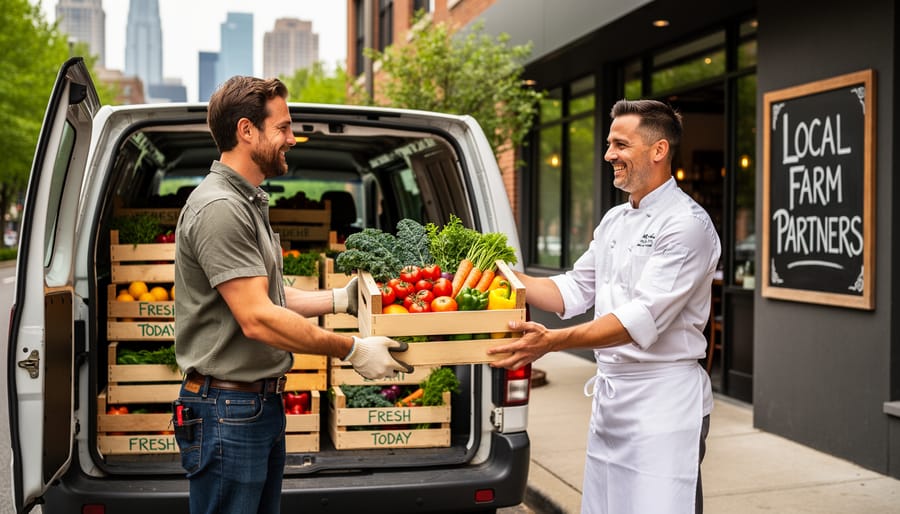
The most successful farm-to-table partnerships hinge on consistent, honest communication. Weekly check-ins, even just a five-minute call, keep both sides aligned on what’s coming out of the ground and what’s needed in the kitchen. Many growers send their chefs a “harvest forecast” each Thursday for the following week, listing crops approaching peak ripeness and estimated quantities. This simple rhythm lets chefs plan specials around actual availability rather than guesswork.
Harvest scheduling requires flexibility from both parties. Urban farms can’t always predict exactly when tomatoes will ripen or when an unexpected heat wave will accelerate lettuce growth. The best partnerships build buffer time into delivery windows and maintain backup menu options. Some chefs visit the farm weekly during peak season, walking rows to see what’s ready and tasting varieties they’re unfamiliar with, this hands-on connection sparks creativity and deepens mutual understanding.
Menu planning collaboration transforms the relationship from transactional to creative. When a chef shares their seasonal menu plans three months ahead, growers can plant accordingly. Conversely, when farms propose trying unusual varieties or succession plantings, adventurous chefs get first access to ingredients their competitors can’t source.
Trust builds through transparency about both successes and setbacks. Farms that immediately communicate crop failures give restaurants time to adjust rather than scrambling at delivery time. Restaurants that pay promptly and share customer feedback help farms improve quality and understand market preferences.
Schools and Educational Institutions: Growing the Next Generation
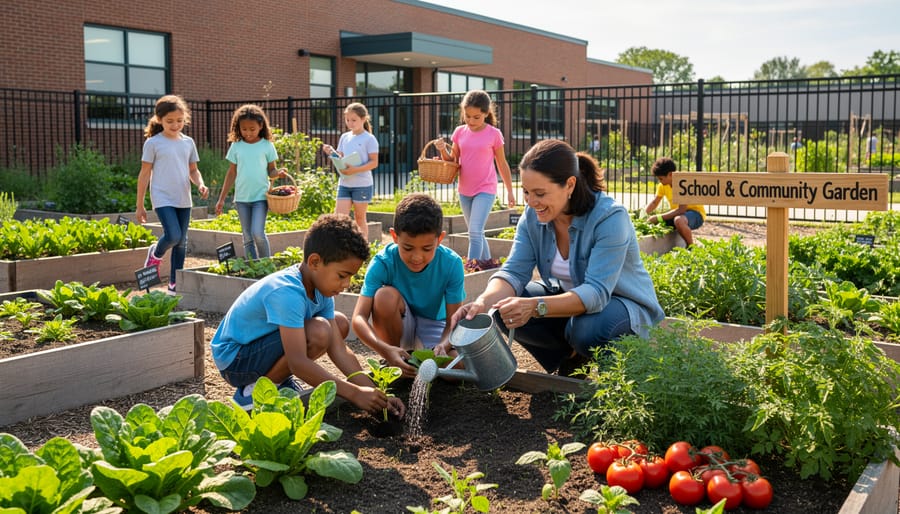
Urban farms partnering with schools create learning laboratories where students dig into real-world science, nutrition, and environmental stewardship. These collaborations transform abstract curriculum concepts into tangible experiences that students can touch, taste, and tend throughout the growing season.
At the elementary level, urban farms work with teachers to bring garden-based education in schools to life through hands-on planting days, harvest celebrations, and classroom composting programs. Students track plant growth for math lessons, study pollinator ecosystems for science units, and write about their gardening experiences for literacy practice. Many partnerships include weekly garden time where kids learn responsibility by caring for designated beds, discovering that the lettuce they planted in April feeds their May salad bar lunch.
Universities and colleges offer different partnership dynamics. Campus farms collaborate with academic departments to provide research sites for environmental science students, nutrition data for dietetics programs, and business case studies for entrepreneurship courses. Student workers gain agricultural skills and job experience while producing thousands of pounds of vegetables for campus dining halls. Some universities integrate quality control protocols into their operations, giving students exposure to food safety standards they’ll encounter in professional agriculture careers.
The most successful school partnerships extend beyond the growing season. Urban farms host field trips, provide internships, supply curriculum materials, and train teachers. They donate produce to school food pantries serving families facing food insecurity, creating a direct connection between student learning and community impact.
These collaborations benefit everyone involved. Schools gain outdoor classrooms and fresh food. Farms access dedicated volunteers, research partnerships, and community credibility. Students graduate with practical skills, environmental awareness, and personal connections to where their food originates.
Community Organizations and Nonprofits: Addressing Food Access Together
Urban farms partnering with community organizations and nonprofits create powerful alliances that tackle food insecurity head-on while strengthening neighborhood bonds. These collaborations address systemic gaps in food access by connecting fresh, locally-grown produce with families who need it most, often in neighborhoods classified as food deserts where grocery stores are miles away and transportation poses real barriers.
Food banks have emerged as natural partners for urban farms seeking to maximize their community impact. Boston-based farms routinely deliver harvest surplus to organizations like the Greater Boston Food Bank, ensuring that produce reaches distribution networks already embedded in underserved communities. Unlike the wilted lettuce or bruised apples sometimes donated from commercial sources, farm-fresh vegetables arrive at peak ripeness and nutritional value, dignifying the food assistance experience while improving health outcomes for recipients.
Community health centers represent another vital partnership category, recognizing that prescribing vegetables can be as important as prescribing medicine. Several urban farms now participate in produce prescription programs where doctors literally write prescriptions for fresh fruits and vegetables, which patients redeem at farm stands or through delivery partnerships. These initiatives directly address diet-related health conditions prevalent in low-income communities while creating guaranteed markets for urban growers.
Key community organizations that make strong urban farming partners include:
- Food pantries and meal programs that need consistent fresh produce sources
- Youth development organizations seeking experiential learning and job training opportunities
- Senior centers looking for accessible gardening activities and nutritious food options
- Immigrant resource centers connecting traditional farming knowledge with new community roots
- Neighborhood associations coordinating vacant lot transformations and community events
Neighborhood associations often serve as crucial connectors, helping farms navigate community relationships and identify unused spaces ripe for transformation. They understand local needs, can mobilize volunteers, and know exactly which families would benefit most from farm share programs or learning how to join community gardening initiatives.
The most successful partnerships share a commitment to dignity alongside access. They design distribution systems where fresh food comes without stigma, offer culturally appropriate vegetables that reflect neighborhood demographics, and create pathways for community members to participate in growing, not just receiving.
Local Businesses and Retail Spaces: Greening Commercial Properties
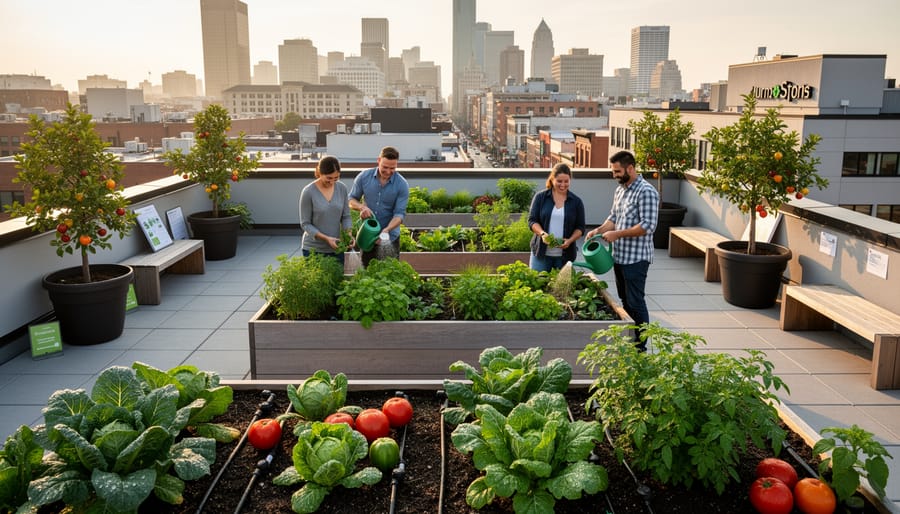
Employee Engagement Through Workplace Gardens
Workplace gardens create unexpected moments of connection that typical team-building exercises can’t match. When employees from different departments dig soil together or harvest lettuce for the office cafeteria, hierarchies dissolve and authentic conversations emerge naturally. Tech companies and financial firms report that their rooftop gardens become informal gathering spaces where stressed employees decompress during lunch breaks, significantly reducing workplace tension.
These partnerships also transform corporate sustainability pledges into tangible daily experiences. Rather than reading about environmental goals in an email, employees witness farming innovations like vertical growing systems or composting programs firsthand. Companies often discover that garden volunteers become their most passionate internal sustainability advocates, organizing lunch-and-learns about urban agriculture and proposing new green initiatives. The continued innovation in workplace garden design means businesses can start small with a few raised beds and expand based on employee enthusiasm, creating a culture where environmental stewardship feels accessible rather than abstract.
Making Partnerships Work: Lessons from the Field
Building successful partnerships between urban farms and local businesses requires deliberate planning and genuine commitment from both sides. The most enduring collaborations start with honest conversations about what each partner can realistically contribute and what they hope to gain. Before approaching potential partners, take inventory of your resources, whether that’s consistent produce supply, volunteer labor, educational expertise, or physical space, and be clear about your constraints.
When you identify a promising partnership opportunity, schedule an in-person meeting to discuss expectations. Come prepared with specific ideas rather than vague proposals. Instead of suggesting “we could work together,” propose “we could supply 20 pounds of mixed greens weekly for your weekend brunch menu.” Concrete offers make it easier for busy business owners to visualize the partnership and assess feasibility.
- Research the potential partner’s values and current practices to ensure alignment with your mission
- Schedule an initial meeting to share your vision and listen to their needs and concerns
- Propose a pilot period of three to six months with clearly defined deliverables from both parties
- Create a simple written agreement outlining responsibilities, schedules, communication protocols, and exit terms
- Establish regular check-ins (monthly at minimum) to discuss what’s working and what needs adjustment
- Document successes with photos, testimonials, and measurable outcomes to strengthen the relationship
- Plan for the partnership’s evolution by discussing long-term goals and potential expansions annually
Written agreements prevent misunderstandings down the road. These don’t need to be complex legal documents, a one-page memorandum of understanding covering harvest schedules, payment terms, liability considerations, and communication expectations often suffices. Include a clause about how either party can exit the partnership respectfully if circumstances change.
Challenges will inevitably arise. Weather impacts harvest timing, restaurant menus shift, organizations face budget cuts, and people change roles. The partnerships that survive these disruptions are those built on flexibility and open communication. When you can’t deliver the promised spinach because of an unexpected heat wave, give your partner advance notice and suggest alternatives. When they need to reduce their order volume, work together to find other outlets for your produce.
Celebrate wins together. Share photos of dishes featuring your produce on social media, co-host community events, and acknowledge each other’s contributions publicly. Recognition strengthens relationships and often attracts new partnership opportunities. The goal isn’t just a transactional arrangement, it’s building a web of interconnected community relationships where everyone thrives because everyone invests in each other’s success.
The partnership examples throughout this article reveal a fundamental truth: urban farming transforms from a modest neighborhood effort into a community-changing force when local businesses join the mission. Whether it’s a restaurant championing farm-to-table meals, a school cultivating the next generation of environmental stewards, or a commercial property owner greening a rooftop, each collaboration multiplies impact beyond what any single organization could achieve alone.
These aren’t theoretical models, they’re real partnerships creating jobs, improving food access, reducing environmental footprints, and strengthening neighborhood bonds right now in cities across the country. The patterns are clear: successful partnerships start with shared values, thrive on open communication, and deliver measurable benefits to everyone involved.
What partnerships could take root in your community? Maybe there’s a café seeking local suppliers, a school looking for hands-on learning opportunities, or a business wanting to enhance employee wellness. The possibilities are as diverse as your neighborhood itself.
At Urban Garden Boston, we’ve witnessed how collaboration turns isolated efforts into thriving ecosystems. We’re here to support community members and local businesses ready to explore partnership opportunities that grow food, build resilience, and connect people to the land beneath their feet.