janet
janetSocial and environmental injustice are inseparable forces that concentrate pollution, limit access to green space and healthy food, and systematically exclude marginalized communities from decision-making about their own neighborhoods. When industrial sites cluster in low-income areas while parks and grocery stores disappear, when rising temperatures hit hardest in concrete-heavy neighborhoods with few trees, when community voices go unheard in development plans, we’re witnessing both injustices at once.
The connection runs deeper than proximity. Environmental degradation doesn’t affect everyone equally. Communities of color and low-income neighborhoods face disproportionate exposure to air pollution, lack of tree canopy, food deserts, and climate impacts. These aren’t accidents of geography. They’re the result of decades of exclusionary zoning, discriminatory housing policies, and planning decisions that treated certain neighborhoods as sacrifice zones.
Here’s what makes this particularly urgent in 2026: these overlapping injustices are accelerating. Urban heat islands grow more dangerous each summer, hitting neighborhoods that were deliberately deprived of green infrastructure. Food apartheid deepens as grocery chains abandon underserved areas. Meanwhile, the communities most affected by these problems are still routinely left out of sustainability initiatives meant to help them.
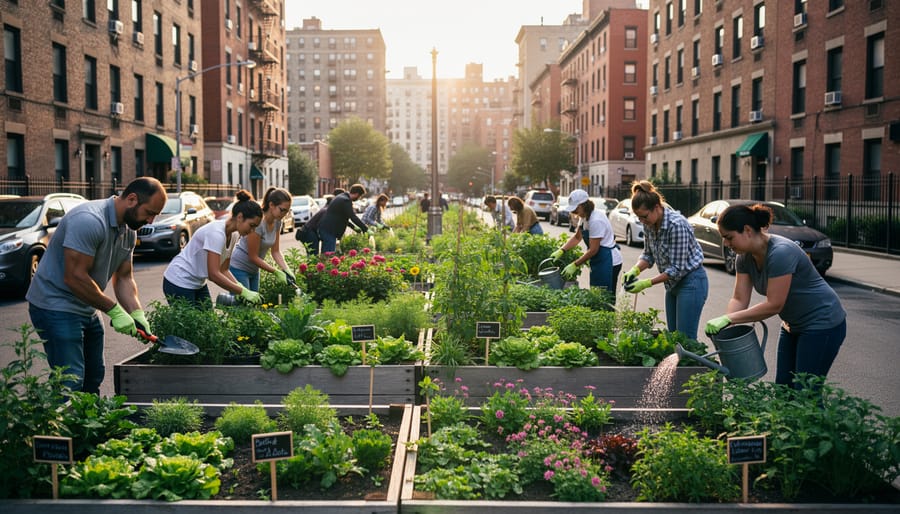
But there’s genuine reason for hope. Urban farming has emerged as a powerful tool that addresses both dimensions simultaneously. When communities transform vacant lots into productive gardens, they’re not just growing food. They’re reclaiming agency, building green infrastructure where it’s needed most, creating jobs, improving air quality, and cooling neighborhoods through increased vegetation.
The beauty of this approach lies in its accessibility. You don’t need a policy degree or a massive budget to start shifting the balance. Grassroots urban agriculture proves that communities can be both the authors and beneficiaries of environmental justice solutions.
Understanding the Twin Crises: Social and Environmental Injustice in Cities
What Food Deserts Really Mean for Communities
A food desert isn’t about sandy dunes or lack of rain. It’s what researchers call an area where people can’t easily buy affordable, nutritious food. In Boston’s Roxbury and Dorchester neighborhoods, for example, residents might travel three miles or more to reach a full-service grocery store, while corner stores selling processed snacks sit on every block.
The statistics matter because lives are at stake. According to the Food Access Research Atlas methods over 13 million Americans live in these zones. When your nearest source of fresh vegetables requires two bus transfers and an hour’s commute, grabbing chips and soda from the bodega becomes the practical choice, not laziness.
This pattern shows up strongest in low-income communities and neighborhoods where most residents are Black or Latino. It’s not coincidence. Decades of redlining, disinvestment, and discriminatory lending pushed grocery chains toward wealthier, whiter suburbs while abandoning urban cores.
The health consequences compound over time. Children growing up without regular access to fruits, vegetables, and whole grains face higher risks of diabetes, heart disease, and obesity. Parents juggling multiple jobs can’t spend hours hunting for affordable produce. Elderly residents on fixed incomes stretch budgets buying canned goods instead of fresh food.
Beyond physical health, food deserts limit economic opportunity. Young people miss school because of diet-related illnesses. Adults manage chronic conditions that could have been prevented. Entire communities lose productive years to preventable diseases rooted in what food was available, not what choices people made.
When Environmental Problems Hit Hardest
Environmental problems don’t affect everyone equally. In Boston’s lower-income neighborhoods, summer temperatures can run 10 to 15 degrees hotter than wealthier areas with mature tree canopy. Residents breathe dirtier air from nearby highways and industrial sites, while lacking parks or green spaces where kids can play safely. Street trees cool cities and filter pollution, but they’re planted far less often in communities of color, creating what researchers call environmental inequity.
This isn’t just uncomfortable. Chronic heat exposure worsens asthma, heart disease, and sleep problems. Children growing up without access to nature show higher stress levels and reduced cognitive development. Property values stay depressed when streets feel unsafe or barren, limiting wealth-building opportunities for families already facing economic barriers. The cycle reinforces itself: neighborhoods with fewer resources get less investment in environmental improvements, falling further behind.
That’s where green eco solutions like urban farming become powerful. They address the environmental deficit while building community strength, creating the cooling canopy and gathering spaces that wealthier areas take for granted.
How Urban Farming Tackles Both Problems at Once
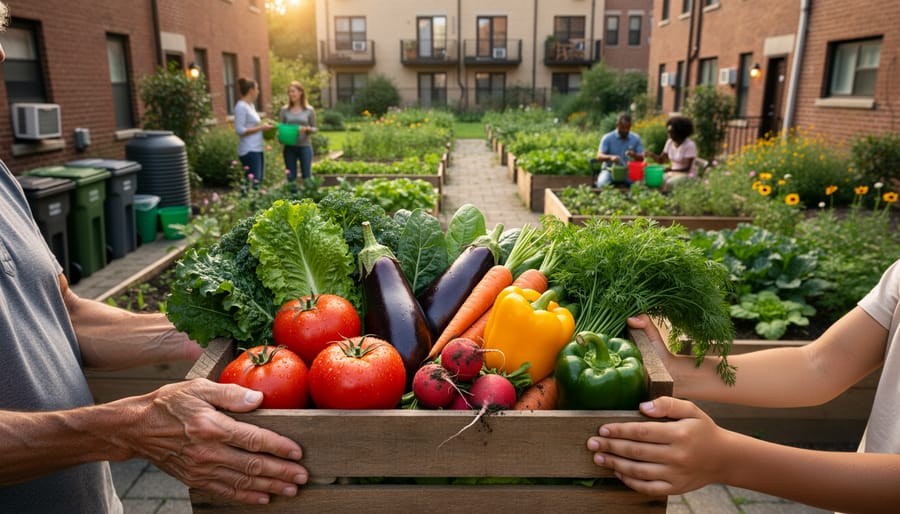
Urban farming works because it doesn’t solve just one problem, it creates ripple effects that address environmental damage and social inequality at the same time. When a community transforms a trash-filled vacant lot into a productive garden, they’re not making a symbolic gesture. They’re rebuilding an ecosystem while creating economic opportunity and restoring community pride in a single action.
The environmental transformation happens fast and visibly. Bare soil becomes covered with crops and mulch, reducing stormwater runoff that overwhelms city drainage systems. Plants pull carbon from the air, lower ambient temperatures by several degrees during summer heat waves, and attract pollinators that have disappeared from concrete-heavy neighborhoods. A single quarter-acre urban farm can produce thousands of pounds of vegetables while filtering air pollutants and creating habitat for beneficial insects. The green space becomes a functioning urban ecosystem instead of a heat-radiating empty lot.
These environmental improvements directly address the health disparities that define social injustice. Residents breathing cleaner air, accessing shade during dangerous heat events, and living near green space report lower stress levels and better mental health outcomes. The produce grown on-site tackles food access issues without requiring residents to travel long distances or pay premium prices for organic vegetables at distant stores.
Urban farms deliver multiple interconnected benefits to communities facing injustice:
- Direct access to fresh, nutritious food grown without pesticides in neighborhoods classified as food deserts
- Local employment with living wages plus skills training in agriculture, food systems, and environmental management
- Environmental improvements including cooler temperatures, cleaner air, stormwater management, and restored biodiversity
- Community gathering spaces where neighbors connect, children learn about nature, and residents develop shared ownership of their neighborhood
- Educational opportunities teaching urban agriculture techniques, nutrition, cooking skills, and environmental stewardship
The economic impact extends beyond produce sales. Urban farms create jobs for residents who live within walking distance, keeping money circulating in the neighborhood rather than flowing out to distant corporations. Workers gain transferable skills in sustainable agriculture, business operations, and community organizing. Some go on to start their own food businesses or pursue careers in environmental fields.
Perhaps most importantly, urban farming shifts the power dynamic. Residents become producers instead of just consumers, decision-makers instead of passive recipients of whatever food systems offer them. They control what gets grown, who benefits from the harvest, and how their neighborhood space gets used. That shift from dependence to agency addresses the root of social injustice in ways that external aid programs never can.
Real Stories: Communities Taking Action
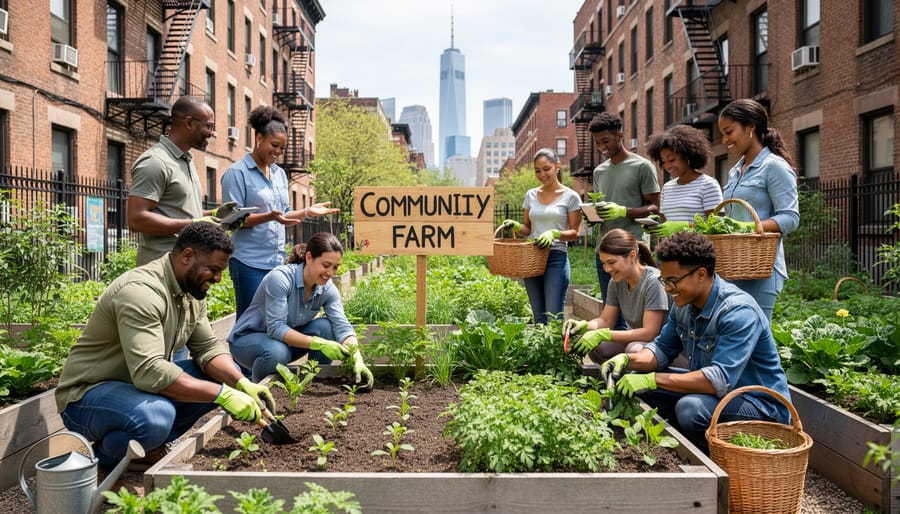
Turning Vacant Lots Into Community Assets
In Dorchester’s Codman Square neighborhood, a trash-strewn lot sat empty for twelve years, attracting illegal dumping, becoming a haven for rats, and serving as a constant reminder of neglect. When residents finally gained access to the quarter-acre space in 2023, they cleared three tons of debris before breaking ground on what’s now the Codman Square Community Farm.
The transformation took eighteen months and involved sixty-two neighborhood volunteers, most with no farming experience. They built raised beds from reclaimed wood, installed a rainwater collection system, and planted heritage vegetables chosen by elder residents who remembered growing them decades earlier. The farm now produces roughly 3,000 pounds of organic vegetables annually, distributed through a sliding-scale farmstand where neighbors pay what they can afford.
But the environmental improvements, reduced urban heat, cleaner air, stormwater absorption, tell only half the story. The farm hosts weekly community dinners during growing season, employs four local teens year-round, and has become the neighborhood gathering spot it never had before. Property crimes in the immediate area dropped twenty-three percent since the farm opened, not because of policing but because people started showing up, caring for the space, and watching out for each other.
These community partnerships between residents, local businesses, and nonprofits created something the neighborhood desperately needed: proof that they could reshape their own environment and, in doing so, strengthen the social connections that had frayed over years of disinvestment.
Creating Meaningful Work Where It’s Needed Most
Urban farming creates jobs where traditional employment has vanished. In neighborhoods that lost manufacturing and retail over decades, urban agriculture brings paid work back to the community, and not just any jobs, but positions that build real skills.
A food production worker at an urban farm learns plant care, harvest techniques, season extension, and food safety protocols. These aren’t minimum-wage tasks with no future. They’re stepping stones into landscaping careers, greenhouse management, farmers’ market businesses, or nutrition programs. One Boston project trained eighteen residents in their first year, with fourteen still working in green industries two years later.
The wages matter too. Urban farms that partner with community organizations typically pay above minimum wage and offer consistent hours rather than gig-economy uncertainty. Workers often live within walking distance, eliminating transportation barriers that keep people out of suburban jobs.
Youth programs introduce teenagers to agricultural work through paid summer positions, giving them income and mentorship in neighborhoods where both are scarce. Some discover a career path they never knew existed. Others simply gain work experience and references that help them land their next opportunity.
Building Food Security Block by Block
Urban farms create food security by putting fresh produce within walking distance of residents who need it most. In Boston’s Dorchester neighborhood, community gardens now deliver over 3,000 pounds of vegetables annually to families who previously relied on corner stores with limited fresh options. These aren’t token gestures, residents harvest collard greens, tomatoes, and herbs they actually eat.
Partnership models multiply the impact. Several urban farms reserve half their harvest for local food pantries, while others run sliding-scale farm stands where neighbors pay what they can afford. Some projects coordinate with WIC programs to accept benefit cards, removing financial barriers entirely.
When communities control their food sources, they choose what grows. That means culturally relevant crops, callaloo for Caribbean families, Chinese vegetables for Asian communities, instead of whatever shipped in from thousands of miles away.
Getting Started: Ways You Can Make a Difference
For Community Organizations and Groups
Starting an urban farming project as a community organization begins with assessing what you already have. Look for vacant lots, unused corners of parks, or underutilized spaces near community centers. Contact your city’s planning department about temporary use permits, many cities now have streamlined processes for community gardens and urban farms.
Build partnerships before you break ground. Connect with established urban farms for mentorship, reach out to local nurseries for plant donations, and engage neighborhood health centers or food banks as distribution partners. These relationships provide both practical support and credibility.
Most importantly, involve residents from day one. Host listening sessions to understand what the community actually wants, not what you assume they need. Some neighborhoods prioritize job training, others want a gathering space, and many want both. Form a steering committee with neighborhood residents who’ll guide decisions, not just volunteer for workdays.
Secure funding through community development grants, local business sponsorships, or crowdfunding. Start small with a pilot season rather than attempting a full-scale operation immediately. Document everything, photos, volunteer hours, produce grown, because your first season’s data opens doors to bigger support.
For Individuals Without Garden Space
You don’t need your own plot to make an impact. Community gardens often have shared work days where members collectively maintain common areas, helping dozens of families access fresh food while you learn alongside experienced growers. Beyond that, local urban farms depend on volunteer labor for planting seasons, harvest events, and educational programs, showing up for even one weekend morning creates real value. Supporting these projects financially matters too, whether through buying produce at farm stands, joining CSA programs, or donating to organizations expanding green space in underserved neighborhoods. You can also advocate for policy changes that protect community growing spaces or join community gardens where membership includes work commitments rather than individual plots. Speaking at city planning meetings about converting vacant lots to green space amplifies community voices pushing for environmental justice.
Addressing Common Concerns About Urban Farming and Justice
Urban farming isn’t a magic fix, and it’s important to address concerns head-on rather than pretend everything works perfectly. The gentrification question weighs heavily on many neighborhoods, when gardens and green spaces improve an area, property values can rise and push out the very residents the projects aimed to serve. Preventing this requires intentional community ownership structures, long-term land trusts, and policies that protect affordable housing alongside green development. Urban farming projects succeed when they’re led by community members themselves rather than imposed from outside.
Can urban farms really make a difference on systemic problems?
Urban farms address immediate local needs like food access and employment while building community power to tackle larger issues. They’re one tool among many, not a complete solution.
How do projects avoid green gentrification?
Community-controlled land ownership, affordable housing protections, and ensuring original residents lead and benefit from projects help prevent displacement. It requires planning these safeguards from the start.
What happens when initial funding runs out?
Sustainable projects build multiple revenue streams through produce sales, educational programs, and partnerships with local businesses. Strong community connections also create volunteer support that helps weather funding gaps.
Who decides what gets planted and how the space is used?
Community-governed farms involve residents in decision-making through regular meetings and voting processes, ensuring the space reflects actual neighborhood needs rather than outsider assumptions.
Funding remains a real challenge. Most urban farms require startup investment for soil remediation, infrastructure, and initial staffing, but maintaining rigorous quality control and operations long-term demands steady resources. Successful projects diversify income through farmers market sales, restaurant partnerships, grant combinations, and educational programming rather than depending on a single source.
Scale matters too. A neighborhood garden won’t solve citywide food deserts or unemployment, but networks of farms across multiple neighborhoods create meaningful impact. The solutions for urban agriculture work best when they’re part of broader justice movements addressing housing, wages, healthcare, and education simultaneously.
These limitations don’t diminish urban farming’s value. They remind us that community-led projects need support, protection, and connection to wider change efforts to fulfill their potential.
Tackling social and environmental injustice doesn’t happen through one solution or overnight. It requires sustained effort from individuals, communities, organizations, and policymakers working together. Urban farming sits at the intersection of these efforts, transforming physical spaces while strengthening social connections and creating economic opportunities.
What makes these projects powerful isn’t just the food they grow or the green spaces they create. It’s the way they put decision-making and resources directly into the hands of communities that have been overlooked. When neighbors come together to turn a vacant lot into a thriving garden, they’re not waiting for someone else to fix their neighborhood. They’re building the change they want to see.
You don’t need expertise or land to start making a difference. Pick one action that fits your life right now. Show up to volunteer at an existing urban farm. Start conversations in your neighborhood about unused spaces. Support local food justice organizations with your time or resources. Advocate for green space policies that prioritize underserved communities.
The work of addressing injustice happens at every scale, from a single raised bed to city-wide policy changes. What matters is starting somewhere and staying engaged.
If you’re in the Boston area and ready to get involved, Urban Garden Boston offers multiple ways to participate in community-driven urban agriculture. Whether you’re looking to volunteer, start a project in your neighborhood, or explore sustainable landscaping options, we’d love to connect with you and work together toward more just, green, and thriving communities.