Showing: 1 - 10 of 23 RESULTS
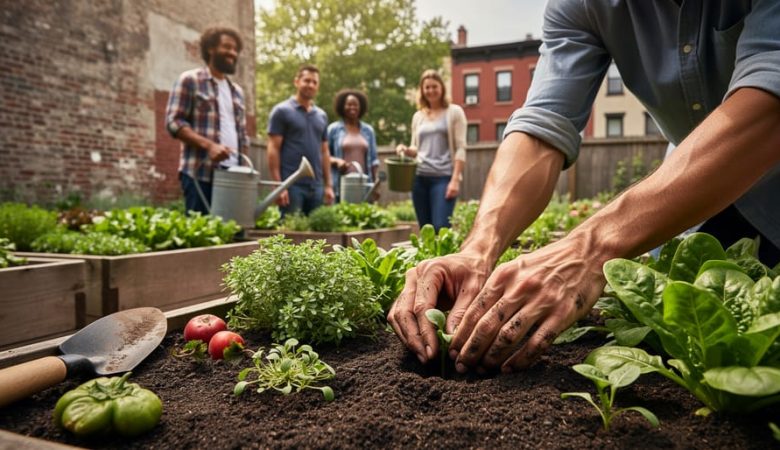
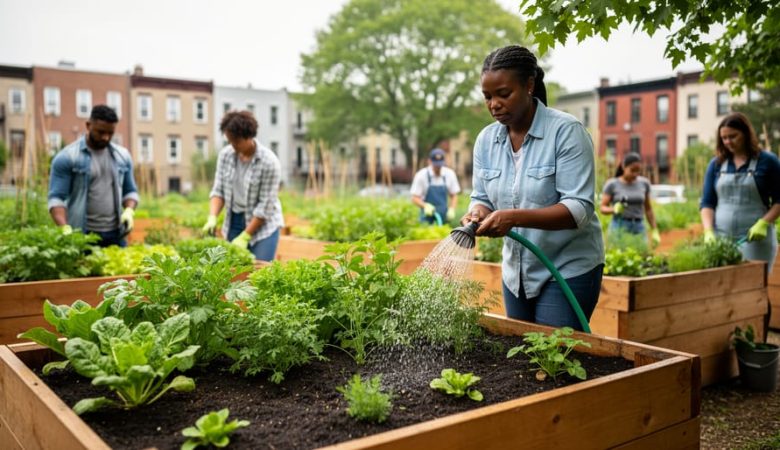
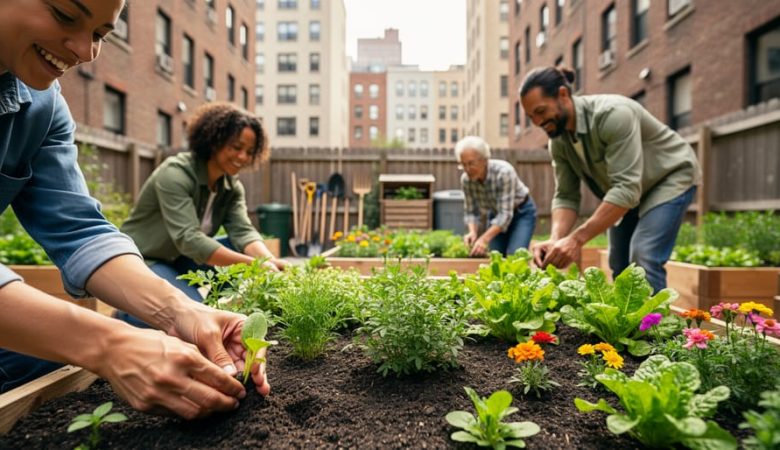
Diverse community members working in an urban garden with raised beds of leafy greens on a neighborhood street under soft daylight.
Boston Urban Agriculture Urban Farming Blog

Social and Environmental Injustice: What Urban Farming Can Actually Change

Social and environmental injustice are inseparable forces that concentrate pollution, limit access to green space and healthy food, and systematically exclude marginalized communities from decision-making about their own neighborhoods. When industrial sites cluster in low-income areas while parks and grocery stores disappear, when rising temperatures hit hardest in concrete-heavy neighborhoods with few trees, when community voices go unheard in development plans, we’re witnessing both injustices at once.
The connection runs deeper than proximity. Environmental degradation doesn’t affect everyone equally. Communities of …

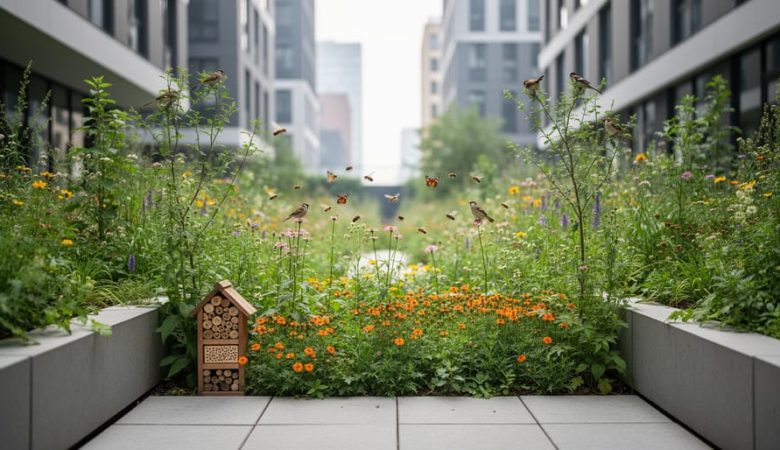
Urban garden with native plants and wildflowers supporting birds and pollinators, set against a softly blurred city background.
Boston Urban Agriculture Urban Farming Blog

What Is Biodiversity and Sustainability (and How Do They Work Together)?

Biodiversity and sustainability are two sides of the same coin. Biodiversity refers to the variety of life in a given space, from microorganisms in soil to birds overhead, while sustainability means meeting our needs today without compromising future generations’ ability to meet theirs. When we talk about landscapes, these concepts become inseparable: diverse ecosystems naturally support the long-term health of our environment, providing cleaner air, better water filtration, pollination for food crops, and resilience against climate extremes.
In cities across America, the connection between biodiversity and sustainability is …

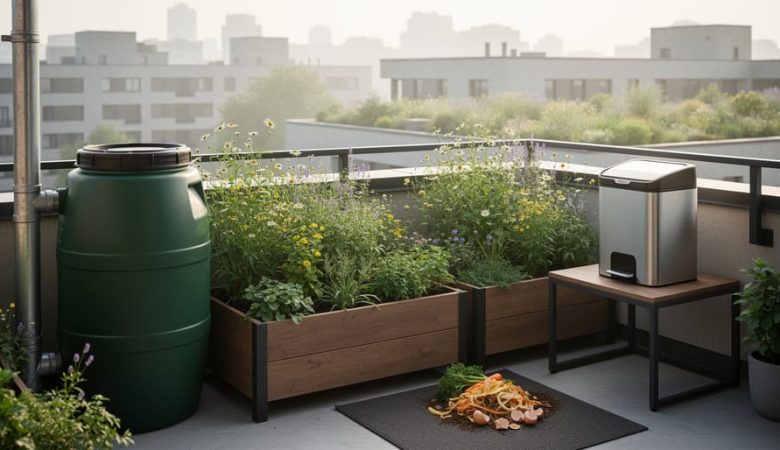
Sunlit urban balcony featuring a rainwater barrel, native wildflower planters, and a compost bin beside a city courtyard with greenery in the background.
Boston Urban Agriculture Urban Farming Blog

7 Green Eco Solutions That Transform Urban Spaces into Thriving, Sustainable Communities

The most effective green eco solutions for urban spaces right now combine rainwater harvesting, native plant landscaping, and composting systems to cut water use by up to 50%, reduce landfill waste, and restore local ecosystems without requiring a backyard or advanced gardening skills. These approaches work because they adapt regenerative practices to the constraints of city living: balconies, rooftops, shared courtyards, and community plots where every square foot counts.
Cities face unique environmental challenges…

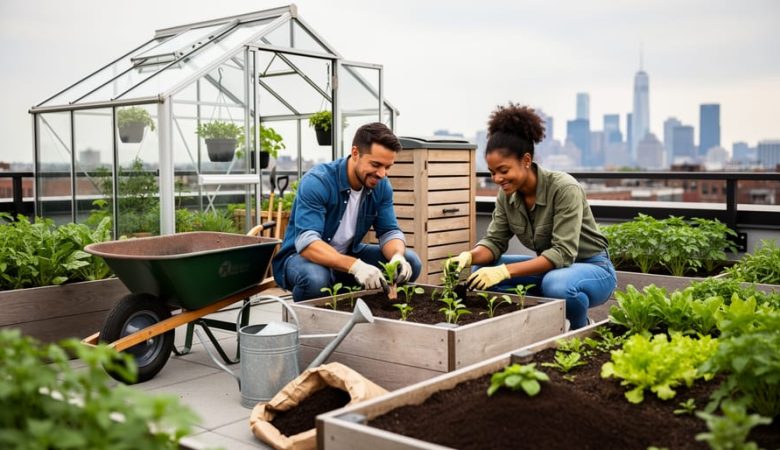
Two people collaborating in a rooftop garden with shared tools and raised planting beds, illustrating urban community partnerships.
Boston Urban Agriculture Urban Farming Blog

Partnership Business Examples That Are Transforming Urban Communities

Partnership businesses thrive when two or more parties combine resources, expertise, and networks to achieve outcomes none could reach alone. From urban farms linking with local restaurants to share harvest risk and guarantee fresh produce, to community gardens partnering with schools to teach sustainable agriculture while creating green spaces, these collaborations prove that shared investment often yields stronger results than solo ventures. The model works because each partner brings distinct strengths to the table: one might offer land or equipment, another provides technical knowledge or customer access, and together they split both …

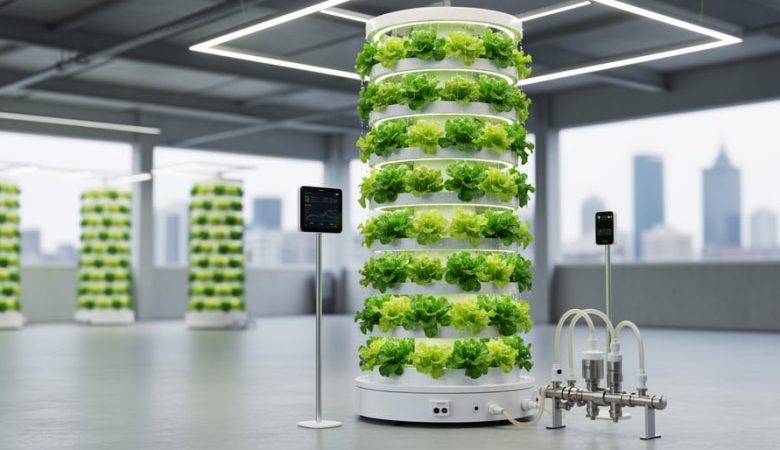
Hydroponic tower growing leafy greens in an urban warehouse with automated irrigation equipment and smart sensors nearby.
Boston Urban Agriculture Urban Farming Blog

What Are Farming Innovations (and How Are They Transforming Urban Agriculture)?

Farming innovations are the advanced technologies, methods, and systems transforming how we grow food, from vertical farms in city warehouses to sensors that monitor soil health in real time. These breakthroughs matter because they’re making agriculture more productive, sustainable, and accessible, especially in urban environments where space is limited and communities are hungry for fresh, local produce.
For anyone curious about how technology is reshaping food production, or for community organizers exploring new project possibilities, understanding these innovations opens up exciting pathways. We’re seeing rooftop …

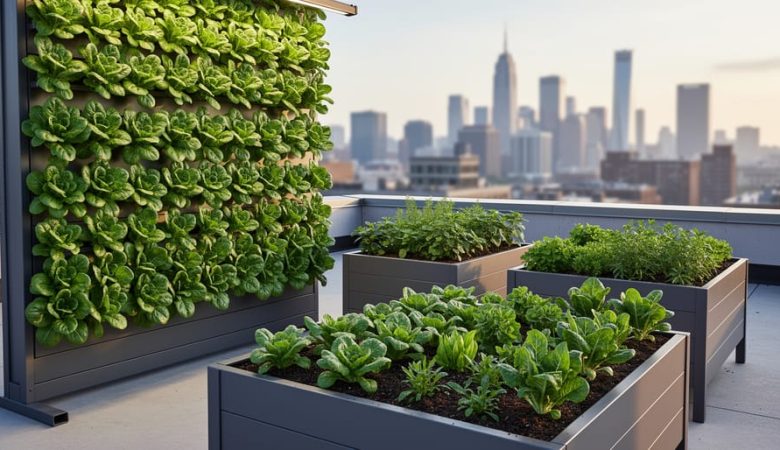
Vertical farming wall and rooftop raised planters filled with healthy leafy greens in an urban setting under soft daylight.
Boston Urban Agriculture Urban Farming Blog

What Are the Solutions for Urban Agriculture? (and How They Overcome Common Challenges)

Solutions for urban agriculture are proven methods and technologies that address the unique challenges of growing food in city environments, from maximizing limited space to managing poor soil quality and restricted water access. These approaches range from vertical farming systems and rooftop gardens to community-led soil remediation programs and innovative irrigation techniques that make productive food cultivation possible even in the densest metropolitan areas.
Cities face a fundamental paradox. While urban populations continue to grow and food security becomes increasingly urgent, the space available for traditional agriculture…

Neighbors planting and tending raised beds in an urban community garden with leafy greens, herbs, and flowers under soft daylight.
Boston Urban Agriculture Urban Farming Blog

Urban Community Gardens: Eligibility, How to Join, and Where to Get Support

Urban community gardens transform vacant lots and underused spaces into flourishing green hubs where neighbors grow food together, share knowledge, and build stronger connections across city blocks. These collaborative plots offer city residents without private yards the chance to cultivate vegetables, herbs, and flowers while splitting tasks, costs, and harvests with fellow gardeners who bring diverse skills and cultural growing traditions to shared soil.
Getting started is more straightforward than most people expect. Most community gardens accept members year-round through a simple application process, with plots available for as…

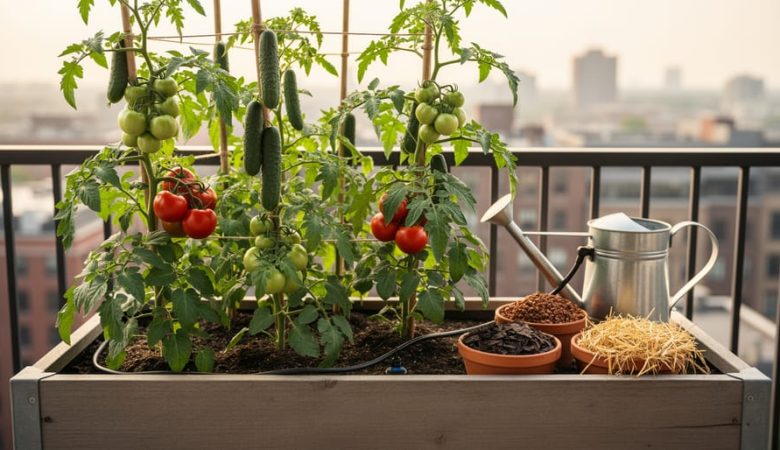
Urban raised garden bed with thriving tomato and cucumber plants, trellises, and nearby test pots of mulch materials in soft daylight.
Boston Urban Agriculture Urban Farming Blog

How Continued Innovation Keeps Your Urban Garden Thriving Year After Year

Continued innovation in urban gardening means treating your plot as a living laboratory where small, deliberate experiments build on what you’ve already learned. The approach breaks through plateaus by testing one new variable at a time, whether that’s companion planting combinations, water-saving techniques, or season extension methods, then observing results and adjusting accordingly. This incremental process transforms setbacks into data points and keeps your garden productive year after year.
Most gardeners hit a wall after their first season. The early excitement fades when tomato yields drop, soil refuses to drain …

A smartphone held above a planter as blurred video-clip fragments float like harvested pieces over a backyard garden.
Boston Urban Agriculture Urban Farming Blog

What Is Clip Farming (and How Does It Work)?

Clip farming is the practice of reposting short video clips from other creators on social media platforms to generate views, engagement, and revenue without creating original content. The strategy has exploded in popularity since early 2026, with some Gen Z creators reportedly earning millions by republishing viral moments, gaming highlights, or trending snippets under their own accounts.
While the term sounds agricultural, clip farming has nothing to do with growing food. It’s a digital content strategy that treats viral video clips like crops to be harvested, reposted, and monetized. Brands now pay creators to repost content…

Urban rooftop permaculture garden with raised vegetable beds, trellised plants, shaded greens, and a small pond connected to rainwater collection.
Boston Urban Agriculture Urban Farming Blog

Why Permaculture Farming Is Thriving in Cities Right Now

Permaculture farming works by designing agricultural systems that mimic natural ecosystems, creating self-sustaining gardens and farms that require less water, eliminate chemical inputs, and actually improve soil health over time. The core method arranges plants, water sources, and structures in patterns that allow each element to support the others, turning typical gardening problems into solutions. A nitrogen-fixing tree shades heat-sensitive vegetables while enriching the soil. Rainwater flows from rooftops through vegetable beds before reaching a small pond that moderates temperatures and attracts beneficial insects.
This …