janet
janetUrban community gardens transform vacant lots and underused spaces into flourishing green hubs where neighbors grow food together, share knowledge, and build stronger connections across city blocks. These collaborative plots offer city residents without private yards the chance to cultivate vegetables, herbs, and flowers while splitting tasks, costs, and harvests with fellow gardeners who bring diverse skills and cultural growing traditions to shared soil.
Getting started is more straightforward than most people expect. Most community gardens accept members year-round through a simple application process, with plots available for as little as $20 to $50 annually depending on your city and garden size. You don’t need gardening experience to join. Gardens actively welcome beginners and provide mentorship, tools, and sometimes even starter plants to help newcomers succeed.
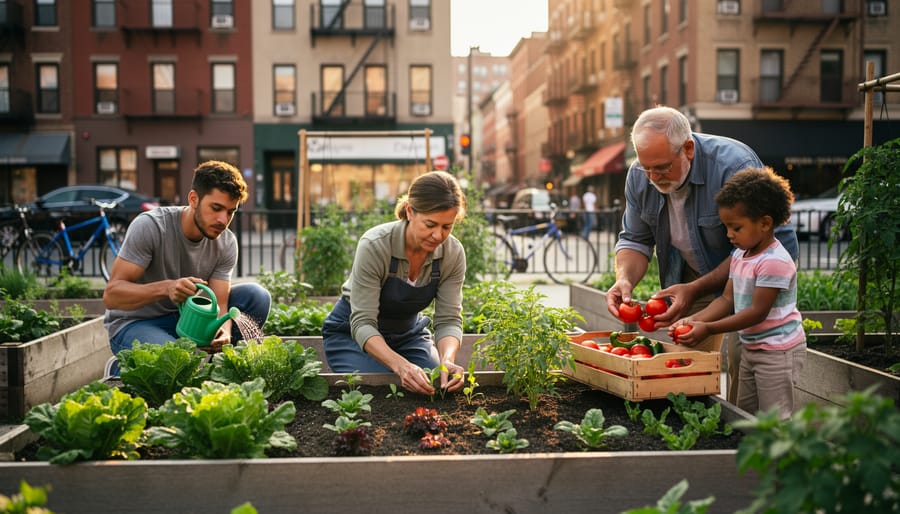
The collaborative model solves practical challenges that stop many urban dwellers from growing their own food. Limited space, lack of equipment, and uncertainty about where to begin all fade when you’re part of a group that shares wheelbarrows, maintains a communal compost system, and gathers on Saturday mornings to work side by side. A retired teacher might show you how to stake tomatoes properly while you help a college student understand crop rotation.
These spaces have multiplied across cities in recent years as people seek both food security and meaningful face-to-face community in an increasingly digital world. What starts as a desire for fresh lettuce often becomes lasting friendships, cultural exchange through seed sharing, and a deepened sense of belonging to your neighborhood. The garden becomes a weekly destination where showing up benefits everyone, and where the work itself becomes a form of connection rather than a solitary chore.
What Urban Community Gardens Are and Why They Matter
Urban community gardens are shared green spaces where neighbors come together to grow vegetables, herbs, flowers, and other plants on public or private land designated for collective use. Unlike traditional backyard gardens, these spaces bring together multiple households, sometimes dozens of families, to cultivate food and community in areas where personal growing space is scarce or nonexistent. Each garden creates a small ecosystem of collaboration where people share not just land, but knowledge, resources, and the rewards of their labor.
Most community gardens operate under one of two main structures. Plot-based gardens divide the space into individual plots, typically 10×10 or 10×20 feet, where each member grows what they choose and keeps their harvest. This model works well in cities like Boston, where gardens such as Fenway Victory Gardens have maintained individual plots since 1942, allowing members creative freedom while still fostering neighborly connections over shared pathways and water sources. Collective gardens, by contrast, pool all labor and harvests. Members work together on the entire space and share what grows, an approach that builds deeper collaboration but requires more coordination and shared decision-making.
Governance varies but typically centers on democratic participation. Many gardens elect leadership committees from their membership to handle day-to-day operations, coordinate workdays, manage waiting lists, and resolve conflicts. Larger gardens might partner with nonprofit organizations or municipal parks departments that provide infrastructure support while members maintain autonomy over planting decisions and community activities. Boston’s Urban Garden Boston, for example, supports multiple sites where gardeners make collective choices about organic practices, water conservation methods, and educational programming.
These spaces matter because they function as more than food production sites. A community garden in Philadelphia’s Kensington neighborhood turned a trash-strewn vacant lot into a gathering place where immigrant families grow traditional crops from their home countries, teaching younger generations about heritage while feeding their households. In Seattle, the Danny Woo International District Community Garden carved 100 terraced plots into a hillside, creating not just vegetables but a vital social network for elderly residents who might otherwise face isolation. The physical act of gardening side-by-side breaks down barriers between strangers, builds trust across cultural and generational lines, and gives urban dwellers meaningful connection to the land and each other.
Who Can Join and Eligibility Requirements
Residency and Location Requirements
Most urban community gardens prioritize serving the neighborhoods where they’re located, which means residency requirements vary significantly from garden to garden. Some gardens require members to live within a specific zip code or neighborhood boundary, while others use a radius system, typically anywhere from a quarter-mile to two miles from the garden site.
Publicly funded gardens often have the strictest geographic requirements because they’re designed to serve particular communities. If a garden receives city or municipal support, you’ll usually need to prove residency in the designated service area through a utility bill, lease agreement, or other documentation. Private or nonprofit-run gardens tend to be more flexible, sometimes accepting members from across the city if plots are available.
Many gardens implement a tiered system: local residents get first priority during plot assignments, followed by people who work in the area, then citywide applicants. This approach balances community focus with inclusivity. If you live outside a garden’s primary zone but have strong ties to the neighborhood, perhaps you work nearby or your children attend school there, it’s worth explaining your connection in your application. Garden coordinators often appreciate members who can regularly tend their plots during business hours.
Membership Fees and Time Commitments
Most urban community gardens charge modest annual fees that cover essential infrastructure and shared resources. Plot rental fees typically range from $20 to $75 per year, though some subsidized gardens charge as little as $10 for low-income residents or seniors. A refundable key deposit of $15 to $30 is common for garden gate access. These fees support water bills, tool maintenance, compost delivery, and soil amendments that benefit everyone.
| Garden Type | Typical Annual Fee | Time Commitment | What’s Included |
|---|---|---|---|
| Plot Rental | $25, $75 | 4-8 hours/month tending plot | Water access, basic tools, compost |
| Collective Garden | $30, $50 | 8-12 hours/month shared work | All supplies, harvest share, workshops |
| Educational Garden | $40, $100 | 6-10 hours/month plus classes | Expert instruction, seeds, specialized tools |
Beyond fees, expect to contribute volunteer hours to communal tasks. Most gardens require 12 to 24 hours annually for workdays, spring cleanup, path maintenance, fence repairs, or organizing events. Some use a membership fee schedule that allows members to buy out volunteer hours if their schedule prevents participation, though hands-on involvement builds the relationships that make community gardens thrive. Your time and dues directly sustain the shared space that feeds families and strengthens neighborhood bonds.
How to Find and Apply to a Community Garden
Locating Gardens in Your Area
Finding a community garden near you starts with a few straightforward searches. Your city or town’s parks and recreation department is often the best first stop, most municipalities maintain updated lists of community gardens, including locations, contact information, and waitlist status. Check the official website or call directly to ask about gardens in your neighborhood.
Beyond municipal resources, several channels can connect you to local opportunities:
- City parks department websites with searchable garden directories
- American Community Gardening Association’s national database
- Neighborhood associations and community development corporations
- Local Facebook groups focused on urban gardening or neighborhood life
- Regional nonprofits like Urban Garden Boston and similar organizations
When browsing options, consider practical factors that affect your experience. Look at the garden’s distance from your home, a plot that requires a long commute becomes harder to maintain consistently. Check whether the garden offers individual plots or operates as a communal space, and review any posted rules about organic practices or design requirements. Some gardens cater to specific communities or focus on particular growing methods, so reading their mission statements helps you find the right fit. If a garden offers open hours or tour days, visit in person to get a feel for the community vibe and see if it matches what you’re looking for.
The Application Process
Most community gardens handle applications through a straightforward process, though the specific steps vary by organization. Start by downloading an application form from the garden’s website or picking one up during open hours. You’ll typically provide basic contact information, verify your address, and indicate any preferences for plot size or location within the garden.
Many gardens require prospective members to attend an orientation session before receiving a plot. These meetings cover garden rules, composting systems, watering schedules, and community expectations. Think of orientation as your first chance to meet fellow gardeners and ask questions about everything from soil preparation to tool storage.
After submitting your application, expect one of three outcomes. Well-established gardens with high demand often maintain waitlists, and you might wait six months to two years for an available plot. Gardens with plots assigned annually typically review applications each winter and notify members by early spring. Newer or expanding gardens may have immediate openings.
Once approved, you’ll receive your plot assignment along with details about payment deadlines, keys or access codes, and your first workday commitment. Some gardens assign plots randomly, while others consider factors like household size or proximity to the garden when making assignments.
The timeline from application to planting varies widely. Spring typically brings the longest waits as everyone wants to start the growing season, while late summer or fall applications sometimes move faster as plots become available.
What to Prepare Before You Start
Starting your first season with realistic expectations sets you up for success. Most experienced gardeners recommend beginning with just three to five easy-to-grow crops like tomatoes, lettuce, or herbs rather than trying to cultivate an entire plot immediately. Expect to spend at least three to four hours weekly during peak growing season, more during initial plot preparation in spring.
Before your first day, review your garden’s specific rules about allowable materials, composting requirements, and any restrictions on structures or plants. Many gardens prohibit treated lumber or chemical pesticides, so confirm what’s permitted before purchasing supplies.
Essential starter tools include a sturdy trowel, hand pruner, watering can or hose nozzle, and gardening gloves. Most gardens provide wheelbarrows and larger tools for shared use, so check what’s available before investing in expensive equipment. Bring a notebook to track planting dates and observations, this record becomes invaluable as you learn what thrives in your specific plot’s microclimate and soil conditions.
Your Rights and Responsibilities as a Garden Member
What You’re Entitled To
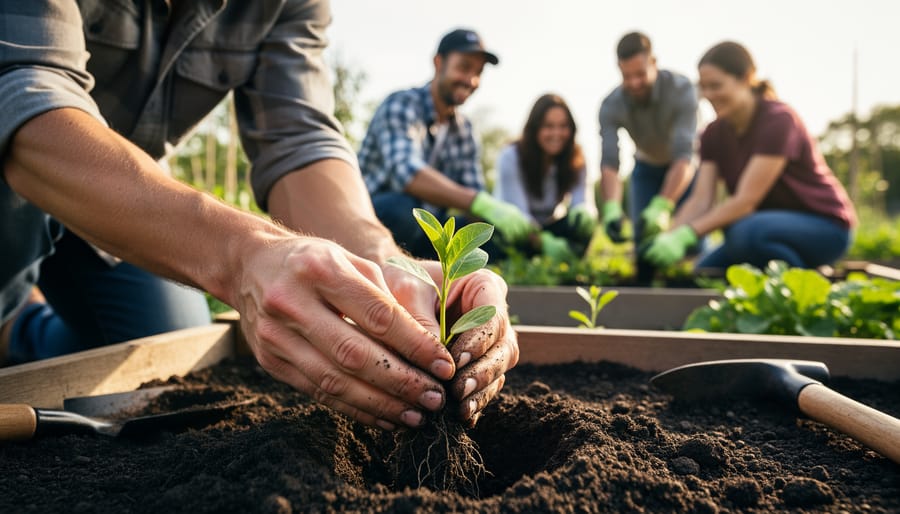
As a community garden member, you hold specific rights that ensure fair access and participation. First and foremost, you’re entitled to exclusive use of your assigned plot during the growing season, typically from spring through fall, which means other members can’t plant in or harvest from your space without permission.
You have guaranteed access to essential shared resources: water from communal spigots or hoses, basic tools from the garden shed (think shovels, rakes, wheelbarrows), and compost from the collective bin. Many gardens also provide mulch, wood chips, or other soil amendments at no extra cost beyond your membership fee.
Everything you grow in your plot belongs to you. Unlike collective harvest models, plot-based gardens let you take home 100% of your produce. Some gardens encourage sharing surplus with neighbors or donating to food banks, but that choice is yours.
You’re entitled to a voice in garden decisions. Most community gardens operate democratically, members vote on rule changes, budget priorities, and major projects. You can attend meetings, join committees, and help shape the garden’s future direction.
Educational opportunities are another key benefit. Workshops on composting, pest management, seed saving, and seasonal planning are common. Experienced gardeners often share knowledge informally while working alongside newcomers, creating a supportive learning environment where everyone’s expertise matters.
What’s Expected of You
Joining a community garden means embracing responsibilities that keep the space thriving for everyone. Your core obligation is maintaining your assigned plot, keeping it planted, watered, and free of weeds so it doesn’t become a haven for pests that spread to neighbors’ beds. Most gardens also require members to contribute several communal workdays each season, typically four to eight depending on the garden’s size, where everyone tackles shared tasks like mulching pathways, repairing fences, or cleaning common areas.
Beyond your individual plot, you’ll need to follow the garden’s growing guidelines. Most community gardens establish basic rules such as:
- No synthetic pesticides or herbicides, organic methods only
- Keep your plot actively planted and weed-free throughout the season
- Participate in scheduled communal workdays, usually once monthly
- Share knowledge, surplus seedlings, and advice with fellow gardeners
- Respect quiet hours and neighborhood noise ordinances
- Dispose of plant waste in designated compost areas, not in plots or pathways
Attending garden meetings, often quarterly or seasonally, gives you a voice in decisions about rule changes, budget priorities, and community events. These gatherings strengthen the collaborative spirit that makes community gardens work. Remember that your neighbors depend on you to pull your weight, and you’ll depend on them too. When everyone honors these commitments, the garden becomes more than a collection of individual plots, it becomes a genuinely shared space where collaboration yields better harvests and stronger relationships than anyone could achieve alone.
Conflict Resolution and Communication
Most community gardens address conflicts through open dialogue and established communication structures. Garden coordinators typically serve as first points of contact for concerns, whether through monthly meetings, email groups, or dedicated message boards where members can raise issues respectfully.
When disputes arise, perhaps over shared tool usage, plot boundaries, or noise levels, successful gardens rely on face-to-face conversations before formal intervention. Many maintain conflict resolution committees of experienced members who mediate discussions between parties, focusing on solutions rather than blame. This collaborative framework transforms potential tensions into opportunities for clearer guidelines and stronger relationships.
Regular check-ins, welcome packets outlining expectations, and seasonal gatherings build the trust that makes difficult conversations easier. Gardens that prioritize transparent communication channels create environments where small issues get resolved quickly, preventing resentment from taking root and reinforcing the shared commitment that makes community gardening work.
Building Collaboration Within Your Garden Community
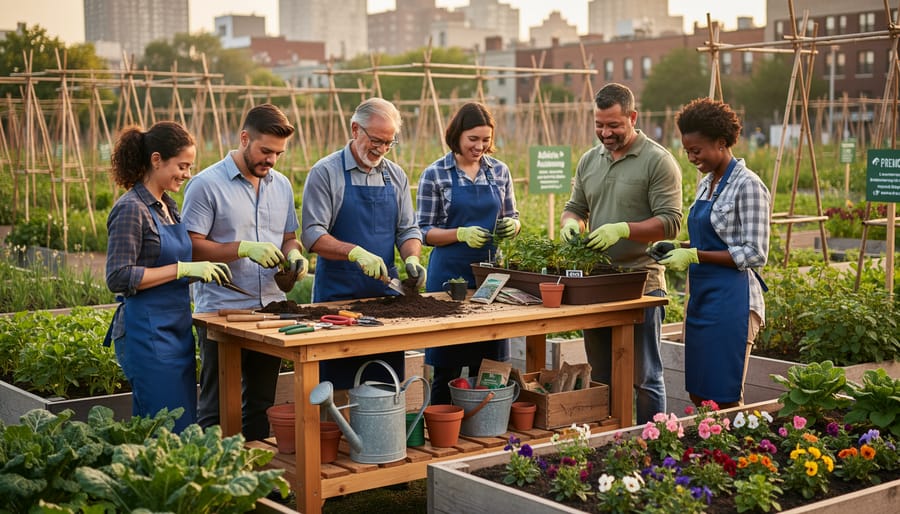
The strongest community gardens thrive not just on individual plot maintenance but on the relationships built between plots. When you create opportunities for members to work together, share knowledge, and learn from each other’s experiences, you transform a collection of separate gardens into a true collaborative community.
Start simple by organizing seasonal potlucks or harvest celebrations where gardeners bring dishes made from their produce. These gatherings let members put faces to the plots they walk past each week and create natural opportunities to swap growing tips. Many gardens find that monthly workdays focused on communal areas, maintaining paths, composting, or building shared structures, build stronger bonds than any formal meeting ever could.
Knowledge exchange happens organically when you design for it. Set up a garden bulletin board where members can post questions, share surplus seeds, or offer advice. Create a seed and plant swap table near the entrance where experienced tomato growers can leave extra seedlings for beginners while picking up herbs they’ve never tried. Some gardens pair new members with experienced mentors for their first season, which benefits both parties, the newcomer gains confidence while the veteran remembers what it’s like to see everything with fresh eyes.
Intergenerational learning enriches every garden community. Older members often bring traditional growing techniques and decades of local weather wisdom, while younger gardeners might introduce new composting methods or water-saving technologies they’ve researched online. Children participating alongside adults learn patience, responsibility, and where food actually comes from, lessons no classroom can replicate.
Cultural diversity becomes one of your garden’s greatest strengths when you actively celebrate it. Encourage members to grow heritage vegetables from their backgrounds and share the stories behind them. A Haitian gardener’s expertise with pigeon peas teaches everyone new possibilities, while a Portuguese member’s kale growing methods benefit the whole community. When you dedicate a section to lesser-known crops or host cultural cooking demonstrations using garden produce, you’re not just growing food, you’re growing mutual respect and curiosity.
The collaborative benefits multiply quickly. Shared pest management strategies work better than isolated efforts. Bulk seed orders reduce costs for everyone. Crop rotations planned together improve soil health across the entire garden. When members genuinely invest in each other’s success, harvest yields increase, problems get solved faster, and your urban oasis becomes the neighborhood gathering place you hoped it would be.
Where to Get Help and Support
Local Organizations and Expert Guidance
The good news is you don’t have to figure out urban gardening alone. Cities and regions offer robust support networks specifically designed to help community gardeners succeed.
Start with your local cooperative extension service, these university-affiliated programs employ horticulturists who provide free or low-cost consultations, soil testing, and problem diagnosis. They’re particularly valuable when you’re dealing with pest identification or nutrient deficiencies that stump even experienced gardeners.
Organizations like Urban Garden Boston coordinate workshops throughout the growing season, covering everything from composting basics to season extension techniques. Many offer bilingual programming and hands-on demonstrations right in community garden settings. Their staff can visit your garden to assess site-specific challenges like poor drainage or excessive shade.
Municipal agriculture offices maintain lists of certified master gardeners who volunteer their expertise. These trained volunteers often hold regular office hours at community gardens or libraries, answering questions about varieties suited to your microclimate, organic pest management, and succession planting.
Don’t overlook neighborhood-specific resources. Many community development corporations employ urban agriculture coordinators who understand your area’s soil conditions, growing challenges, and even connect gardeners with free seedlings or compost programs. They bridge the gap between municipal resources and grassroots garden communities.
Peer Support and Learning Networks
Your fellow gardeners are often your best teachers. Unlike formal classes that follow a set curriculum, peer learning in community gardens happens organically, through casual conversations while weeding, weekend skill shares where members demonstrate techniques, and those moments when an experienced gardener notices you struggling and offers a practical tip that textbooks never mention.
Garden mentorship programs pair newcomers with seasoned members who share everything from when to plant tomatoes in your specific microclimate to how they’ve dealt with persistent pests without chemicals. These relationships often grow into friendships that extend beyond the garden fence. Many gardens also organize regular knowledge exchanges where members teach workshops on topics they know well, whether that’s seed saving, composting methods, building trellises, or growing culturally specific crops.
Online and local resources complement this face-to-face support:
- Garden coordinators who can connect you with experienced members in your plot area
- Urban Garden Boston workshops covering seasonal topics and sustainable techniques
- University extension services offering research-based guidance and soil testing
- Online gardening communities and forums where you can post photos and get plant identification help
- Local seed libraries where you can borrow varieties and share successful harvests
- Tool-sharing programs that reduce individual costs while building community connections
The beauty of peer networks is that everyone contributes. A first-year gardener might know about accessible raised bed designs, while a longtime member shares heritage seeds their family has grown for generations. This exchange of knowledge strengthens the entire garden community.
Success Stories: Community Gardens Making a Difference
Urban community gardens create change that ripples far beyond their fence lines. In Boston’s Dorchester neighborhood, the Fields Corner Community Garden transformed a vacant lot into a thriving hub that now produces over 2,000 pounds of fresh vegetables annually for 45 families. More than half the produce goes to households facing food insecurity, with members donating surplus harvests to local food pantries. The garden’s coordinator notes that families save an average of $400 per growing season on groceries while accessing culturally significant crops like collard greens, plantains, and bok choy that aren’t always available at nearby stores.
The Fenway Victory Gardens, Boston’s oldest community garden system, demonstrates environmental impact alongside community building. Temperature monitoring shows garden plots average 5-8 degrees cooler than surrounding pavement during summer heat waves, creating essential refuge spaces for residents in densely built areas. The gardens’ 600 plots also absorb an estimated 15,000 gallons of stormwater annually that would otherwise overwhelm drainage systems.
Across the country, Philadelphia’s South Kensington Community Food Forest brought together immigrants from seven countries who now share traditional growing techniques and seeds from their home cultures. What began as 12 families has grown to 60 participants who host seasonal potlucks featuring dishes made from garden harvests. A founding member explains that the garden became the first place she felt truly connected to neighbors after moving from Puerto Rico.
In Detroit, the Oakland Avenue Urban Farm converted three abandoned residential lots into productive space that employs four neighborhood youth each summer. These paid positions teach agriculture skills while the farm provides sliding-scale produce to 80 regular customers. The program has seen 70% of youth participants pursue environmental studies or agriculture careers after high school.
These success stories share common threads: neighbors working side by side, knowledge flowing between generations and cultures, and measurable improvements to food access, environmental quality, and social cohesion.
Common Questions About Joining Community Gardens
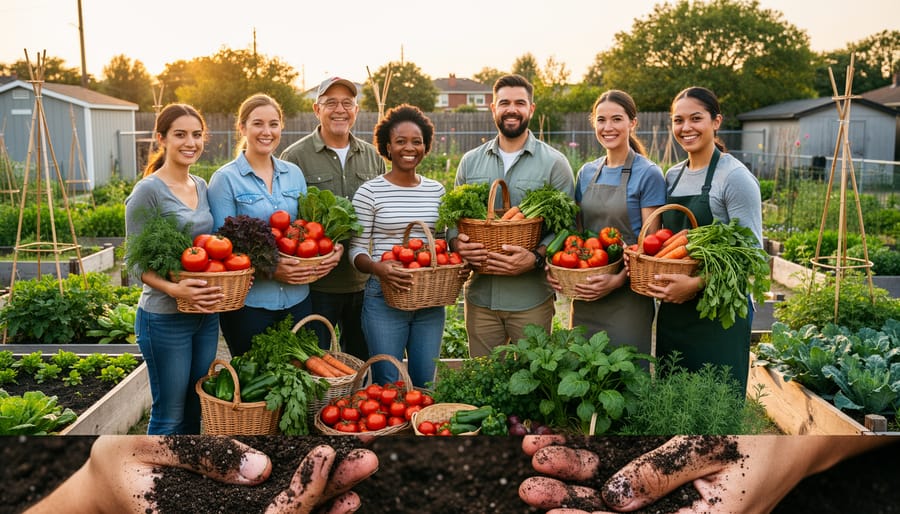
Starting a community garden journey raises practical questions, and understanding what to expect can make the decision to join much easier. Here are answers to the most common concerns prospective members bring to garden coordinators.
Do I need gardening experience to join?
No, most community gardens welcome complete beginners and provide mentorship, workshops, and peer support to help you learn. Many gardens pair new members with experienced gardeners who share tips throughout the season.
What if I travel during the summer?
Most gardens allow you to arrange plot-sharing with another member or ask a garden neighbor to water while you’re away for a week or two. Extended absences may require advance notice to coordinators, and some gardens have temporary care networks.
Can I participate if I rent my home?
Yes, renters are welcome in community gardens. Since the garden space itself is shared community land, homeownership is not required, residency in the general area is typically the only housing-related criterion.
How much time does maintaining a plot really take?
Expect to spend 3-5 hours per week during peak growing season for a standard plot, including watering, weeding, and harvesting. Time commitment varies based on plot size, what you grow, and your gardening approach.
What happens if I can’t maintain my plot?
Gardens typically send a friendly reminder if your plot becomes overgrown or neglected. If you’re struggling, coordinators can often connect you with help or reduce your plot size rather than immediately revoking membership.
Are children welcome in community gardens?
Yes, families with children are encouraged to participate. Many gardens have dedicated youth areas, family-friendly events, and educational programming that teaches kids about growing food and environmental stewardship.
Beyond these common questions, remember that each garden has its own character and specific policies. The best way to get accurate answers for a particular garden is to attend an open house or contact the garden coordinator directly. Most gardeners love talking about their community and will gladly address any concerns you have about joining.
Urban community gardens offer one of the most accessible entry points into sustainable living and meaningful neighborhood connection. Whether you’ve gardened for decades or can’t tell basil from oregano, there’s a plot waiting for you. The eligibility requirements are straightforward, the application process is manageable, and the support networks are welcoming.
Your first step doesn’t require a massive commitment. Visit a garden during open hours to see how the space operates. Chat with members while they’re working their plots. Most gardeners love sharing their experience and will give you an honest picture of what to expect. If you like what you see, get your name on the waitlist or submit an application. Even if there’s a wait, many gardens welcome volunteers in the meantime, which gives you hands-on learning while you’re queued for your own space.
The returns extend far beyond the vegetables you’ll harvest. You’re joining a collaborative effort that strengthens food security, cools your neighborhood, and builds relationships across age groups and cultural backgrounds. Every shared workday, every seedling swap, every conversation over the fence reinforces the fabric of community that makes urban life richer.
The soil is ready. The community is waiting. Your contribution, whatever form it takes, will help create greener, more resilient neighborhoods where collaboration grows as abundantly as the tomatoes.