janet
janetPermaculture farming works by designing agricultural systems that mimic natural ecosystems, creating self-sustaining gardens and farms that require less water, eliminate chemical inputs, and actually improve soil health over time. The core method arranges plants, water sources, and structures in patterns that allow each element to support the others, turning typical gardening problems into solutions. A nitrogen-fixing tree shades heat-sensitive vegetables while enriching the soil. Rainwater flows from rooftops through vegetable beds before reaching a small pond that moderates temperatures and attracts beneficial insects.
This approach has moved far beyond rural homesteads. Urban communities across the country are transforming vacant lots, rooftops, and neglected courtyards into productive landscapes that feed neighbors and rebuild local ecosystems. The principles translate remarkably well to city environments because permaculture focuses on maximizing yields from small spaces through vertical growing, companion planting, and intensive observation of microclimates.
What makes permaculture distinct from conventional gardening is the permanence implied in its name. Rather than replanting annuals each spring and fighting the same pest battles every summer, permaculture farmers establish perennial systems that become more productive and require less intervention as they mature. The initial design phase demands careful planning and observation, but the payoff builds year after year.
Getting started doesn’t require acreage or special equipment. Community gardens, backyard plots, and even balconies can incorporate permaculture ethics of caring for the earth, caring for people, and returning surplus to the system.
What Permaculture Farming Actually Means for City Spaces
Permaculture farming in cities isn’t about cramming rural techniques into small spaces. It’s a design approach that works with urban realities, limited square footage, microclimates created by buildings, and the resources cities naturally provide.
The core principles shift when you’re dealing with a rooftop instead of rolling acres. Working with nature means observing how wind moves between buildings, where rain collects on pavement, and which walls create sun traps. You’re not fighting the city; you’re learning its patterns and designing around them.
- Closed-loop systems
- Waste from one element becomes input for another. Kitchen scraps feed a worm bin, which produces compost for container gardens, which grow food that creates more scraps.
- Stacking functions
- Every element serves multiple purposes. A vertical trellis provides privacy, grows climbing beans, shades a window in summer, and creates habitat for beneficial insects.
- Edge effects
- The most productive zones happen where two systems meet. In cities, this might be where a building wall meets soil, creating a warm microclimate for heat-loving plants.
- Designing for resilience
- Building systems that adapt to disruption. Diverse plant varieties, water storage, and community networks ensure your urban garden survives heat waves, supply shortages, or changing schedules.
Urban permaculture embraces constraints. A balcony garden can demonstrate all these principles in containers. You might stack herbs in vertical pockets, collect balcony runoff for watering, and plant flowers that attract pollinators for neighbors’ vegetables three floors down.
The difference from rural permaculture is scale and creativity. You’re designing intensive systems where every inch counts. A single raised bed might include deep-rooted tomatoes, mid-level lettuce, ground-cover strawberries, and companion flowers, all working together in the space a rural garden might leave to a single crop.
This isn’t about producing all your own food. It’s about understanding how natural systems function and applying those patterns wherever you are, even if that’s a patch of concrete that sees four hours of sun.
How Permaculture Transforms Underutilized Urban Spaces
Starting With What You Have
Your balcony counts. So does that weedy strip beside your building or the corner of a shared yard. Permaculture starts with honest observation of what you actually have, not fantasies about acreage you don’t own.
Spend a week watching your space. Track sunlight patterns throughout the day, which spots get morning sun, afternoon heat, or stay shaded? Notice where water pools after rain and where the ground stays dry. Check wind exposure and observe which existing plants (even weeds) thrive without help.
This observation phase feels slow, but it prevents expensive mistakes. You’ll discover microclimates you didn’t know existed: that south-facing wall that stays warm, the corner protected from wind, the spot where neighbors’ trees create dappled shade perfect for leafy greens.
Even a fire escape or windowsill offers enough space to experiment with container gardening, herb spirals, or vertical growing systems. Community plots work too, you’re simply designing a productive ecosystem within defined boundaries rather than across sprawling land.
Start small, watch carefully, and let what you learn guide your next move. The space you have is enough to begin.
Building Soil and Water Systems in the City
Urban soil often starts compromised, compacted from construction, contaminated by decades of runoff, or simply stripped away entirely. Before planting anything, test your soil through a local extension service or community lab. If contamination shows up, raised beds with clean imported soil become your foundation. Build them at least twelve inches deep, using untreated lumber or food-safe materials, and line the bottom with cardboard to suppress weeds while still allowing drainage.
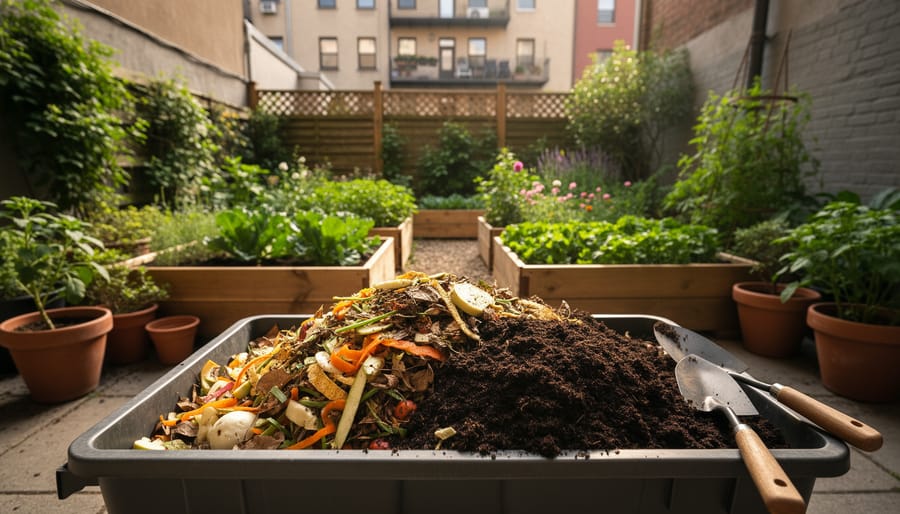
Composting transforms kitchen scraps and yard waste into the fertility your soil needs, even in tight quarters. Worm bins work well on balconies or in small yards, they’re odorless when managed properly and produce nutrient-rich castings. Layer browns (dried leaves, cardboard) with greens (vegetable scraps, coffee grounds) in a ratio that keeps moisture balanced and decomposition active. Some buildings now host shared composting stations, turning individual efforts into collective soil-building.
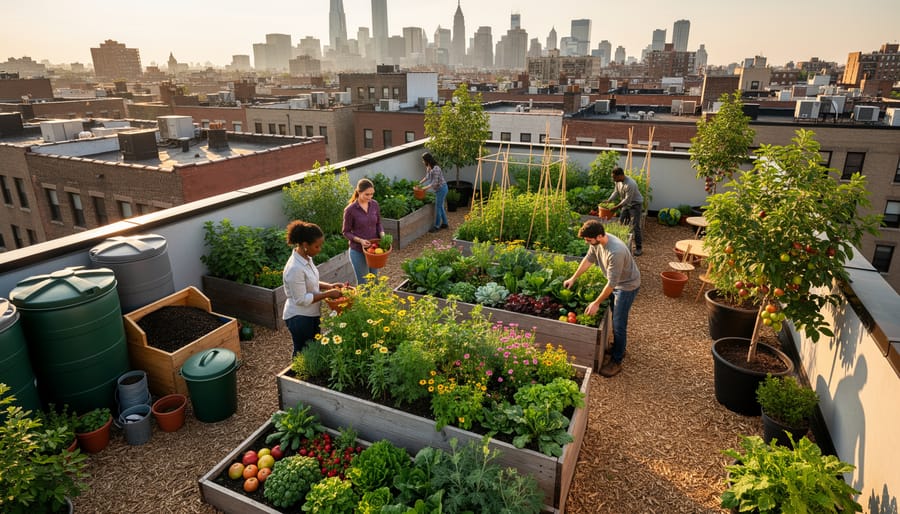
Water access shapes everything in urban permaculture. Rain barrels capture roof runoff for irrigation, reducing reliance on municipal supplies while preventing storm water from overwhelming city systems. Position barrels on stable platforms near downspouts, and use the captured water within a week to prevent mosquito breeding. For larger installations, solar irrigation systems can automate watering without adding to your electric bill, particularly useful for rooftop gardens or community plots where daily hand-watering becomes impractical.
Mulching conserves whatever water you collect, wood chips, straw, or shredded leaves reduce evaporation while feeding soil organisms as they break down.
Community-Powered Permaculture: Real Stories from Urban Gardens
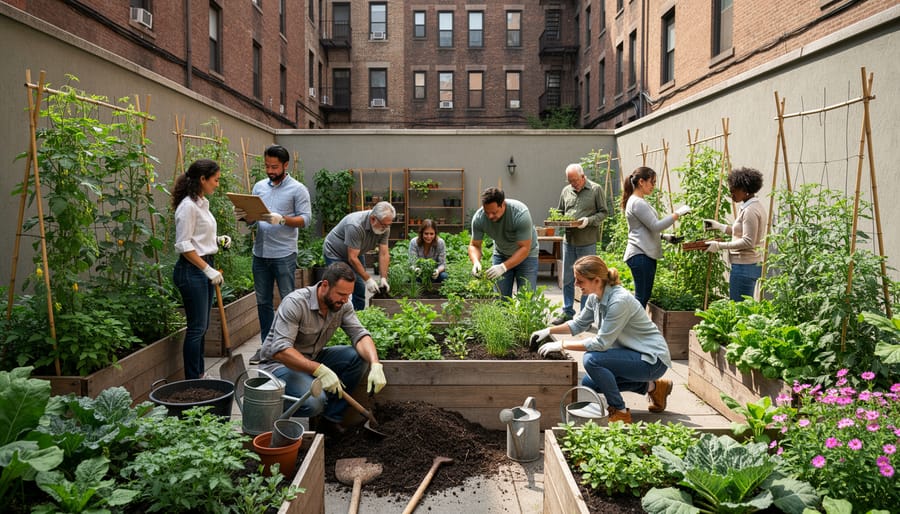
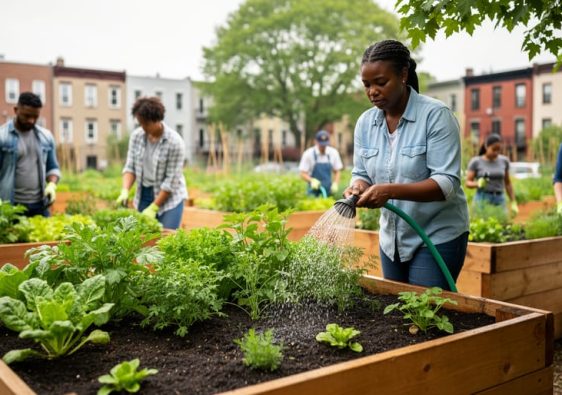
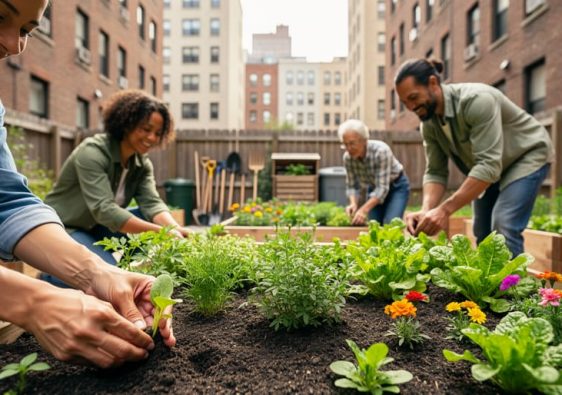
Urban gardens across cities show permaculture principles creating spaces that feed both people and soil while building stronger neighborhoods. These projects share common patterns: they start with dedicated volunteers, transform previously idle land, and gradually draw in broader community participation through tangible results.
Rooftop projects demonstrate how vertical space becomes productive when designed as layered ecosystems. Growers install water catchment systems that feed herb spirals and vertical planters, reducing stormwater runoff while producing fresh ingredients. The spaces double as community gathering spots where neighbors share harvests and learn techniques together.
Vacant lot transformations follow a recognizable arc. Initial clearing and soil building takes dedicated effort, often with community workdays bringing together residents who hadn’t previously connected. As the systems mature and food production becomes visible, more neighbors participate, some tending specific beds, others helping with composting or leading workshops for newcomers.
School garden programs weave permaculture into education, teaching students about closed-loop systems while providing fresh produce for cafeterias. These spaces become outdoor classrooms where kids observe beneficial insects, track seasonal changes, and understand where food originates. The knowledge travels home with students, inspiring family participation in urban agriculture.
Community garden plots that incorporate permaculture methods show how shared spaces evolve. Early adopters experiment with companion planting and sheet mulching, demonstrating results that gradually influence neighboring plots. The gardens become knowledge exchanges where experienced growers mentor beginners, and the collective learns through seasonal successes and setbacks.
These patterns reveal permaculture’s social dimension, the work itself creates connections. Shared problem-solving around space constraints, coordinating plantings, and distributing harvests builds relationships that extend beyond gardening. People discover common ground while literally cultivating common ground.
Learning Permaculture: Programs and Resources for 2026
Getting hands-on education makes the difference between reading about permaculture and actually designing systems that work. Summer 2026 brings several structured learning paths, though many details about pricing and specific organizers remain fluid as programs finalize their offerings.
For those who’ve already completed a Permaculture Design Certificate, the online teacher training runs from June through late August. This program focuses on helping graduates move into teaching roles themselves, covering curriculum design and group facilitation alongside deeper ecological principles. It’s structured for remote participation, which works well for city dwellers juggling other commitments.
The Lost Valley summer program offers a different approach with its “Design the future” intensive running June 27 through August 16 at their Education Center. This immersive format lets participants work directly with established permaculture systems and see long-term projects in action.
| Program | Dates | Location | Requirements |
|---|---|---|---|
| The Teacher Training | June 3, Aug. 25, 2026 | Online | PDC graduates only |
| Design the future | June 27, Aug. 16, 2026 | Lost Valley Education Center | Not specified |
Beyond formal programs, look for weekend workshops through local botanical gardens, urban farms, and community colleges. Many cities now host regular skill-shares on specific topics, composting systems, food forests, water management, that let you learn incrementally. Experienced permaculture designers often offer site consultations that double as learning opportunities; they’ll assess your space while explaining their reasoning and design choices.
Free resources matter too. Local permaculture guilds gather regularly for work parties and knowledge exchanges. You’ll learn faster by helping others build swales or install sheet mulching than you will from most books. Start attending these gatherings even before you commit to formal training, they’ll help you figure out which educational path fits your goals and constraints.
Working Through the Challenges
Urban permaculture sounds perfect until you face a landlord who won’t let you dig, neighbors who complain about your compost bin, or soil that might contain decades of industrial residue. These aren’t reasons to abandon the idea, they’re just the reality of working within city systems.
Space constraints force creative solutions rather than traditional layouts. Vertical growing on walls and fences, intensive succession planting in raised beds, and choosing dwarf or compact varieties all maximize what you have. You won’t replicate a rural food forest in 200 square feet, but you can create a productive microclimate that yields herbs, greens, and some fruiting plants while improving your immediate environment.
Soil contamination is a legitimate concern in urban areas with industrial histories. Testing through your local cooperative extension reveals what you’re working with. Raised beds with clean imported soil, container growing, and phytoremediation plants that gradually absorb toxins offer paths forward. The quality control measures used in established urban farms provide models for safe production even on challenging sites.
Neighbor relations improve when you communicate early and share harvests. Keeping edges tidy, managing potential pest habitats responsibly, and inviting curiosity rather than defending your methods prevents most conflicts. Some zoning regulations genuinely limit what’s possible, research local ordinances before investing heavily.
Time investment catches people off guard. Establishing systems demands more hours upfront than maintaining them later, but those first seasons require real commitment. Start smaller than you think necessary, get one area functioning well, then expand. Permaculture reduces labor over time through smart design, not magic.
Taking Your First Steps in Urban Permaculture
You don’t need land or credentials to begin. Start by observing your own space, balcony, windowsill, shared courtyard, and notice sun patterns, water flow, and existing plants over a few weeks. This observation period teaches you more than any course.
Connect with community gardens in your neighborhood. Most welcome newcomers and offer work-exchange opportunities where you learn while contributing. You’ll find experienced practitioners who share cuttings, compost advice, and hands-on guidance. Many cities maintain lists of community gardens through parks departments or cooperative extension offices.
- Observe your available space for two to four weeks, noting sunlight, water drainage, and wind patterns
- Visit three nearby community gardens and introduce yourself to coordinators
- Start small with one or two container plants to practice observation and care
- Attend a local permaculture workshop or garden open house to meet others and ask questions
- Consider scheduling a consultation with a local permaculture designer for site-specific guidance
Look for workshops through botanical gardens, environmental education centers, and permaculture guilds. These sessions often cover urban gardening basics alongside permaculture-specific techniques like companion planting and water harvesting. Local consultations can transform your thinking about even the smallest spaces, designers spot possibilities you’ll miss.
Join online forums and social media groups focused on urban permaculture in your region. Members share plant swaps, tool libraries, and problem-solving strategies specific to your climate and urban context. The community aspect matters as much as the technique.
Start where you are with what you have. One thriving container garden teaches you soil, water, and plant relationships better than reading another book. Each season builds your understanding.
Urban permaculture is gaining real traction because it addresses what many city dwellers are searching for, a way to contribute to their environment, connect with neighbors, and create something meaningful right where they live. The transformation happening across cities isn’t just about adding green spaces. It’s about redesigning how we interact with our immediate surroundings and building community around shared resources.
You don’t need a rural property or extensive experience to participate. The approach works at any scale, from a balcony container system to a neighborhood lot revitalization. What matters is starting with observation, working with what you have, and connecting with others doing similar work.
The momentum you’re seeing in 2026 reflects a broader shift toward localized food systems and ecological awareness. Urban permaculture offers a practical entry point into that movement. Whether you begin by attending a workshop, volunteering at a community garden, or simply observing patterns in your own space, you’re joining a growing network of people reshaping cities into more resilient, productive ecosystems. The best time to explore how this approach fits your life and neighborhood is now.