janet
janetThe most effective green eco solutions for urban spaces right now combine rainwater harvesting, native plant landscaping, and composting systems to cut water use by up to 50%, reduce landfill waste, and restore local ecosystems without requiring a backyard or advanced gardening skills. These approaches work because they adapt regenerative practices to the constraints of city living: balconies, rooftops, shared courtyards, and community plots where every square foot counts.
Cities face unique environmental challenges. Stormwater runoff overwhelms aging infrastructure, heat islands push temperatures 5 to 10 degrees higher than surrounding areas, and green space remains scarce. Traditional urban agriculture solutions address food production, but a broader toolkit of eco strategies tackles waste, water, air quality, and biodiversity all at once.
The good news? You don’t need to overhaul your entire lifestyle overnight. Small changes compound. A single rain barrel captures hundreds of gallons per year. Replacing a patch of lawn with native wildflowers supports pollinators and eliminates mowing. A countertop compost bin diverts food scraps from the trash stream and produces nutrient-rich soil amendments for houseplants or neighborhood gardens.
Boston neighborhoods have already proven these solutions work at scale. Community groups turned vacant lots into bioswales that filter runoff. Apartment dwellers installed vertical gardens that cool buildings and grow fresh herbs. Local businesses switched to green roofs that reduce energy costs and create urban wildlife habitat. Each example started with one person or group willing to try something new.
How We Selected These Green Eco Solutions
We didn’t just compile a random list of trendy sustainability practices. Each solution in this article meets rigorous standards developed through our years of transforming Boston’s underutilized spaces into productive, ecological areas. Drawing from successful installations across neighborhoods with vastly different conditions, from sun-baked parking lots to shaded courtyards, we’ve identified what actually works in cities.
Our selection criteria include:
- Proven success in dense urban environments with limited space and challenging growing conditions
- Measurable environmental benefits like reduced runoff, improved air quality, or carbon sequestration
- Scalability from balcony gardens to multi-building community projects
- Strong potential for neighbors to work together and share knowledge
- Accessibility for beginners while offering depth for experienced practitioners
The same principles that guide urban farm quality control apply here: we prioritize solutions that deliver consistent results without requiring specialized equipment or advanced degrees in horticulture. Every recommendation reflects real projects where we’ve seen communities transform their relationship with green space, turning environmental challenges into opportunities for connection and growth.
1. Rooftop and Vertical Gardens: Maximizing Unused Space
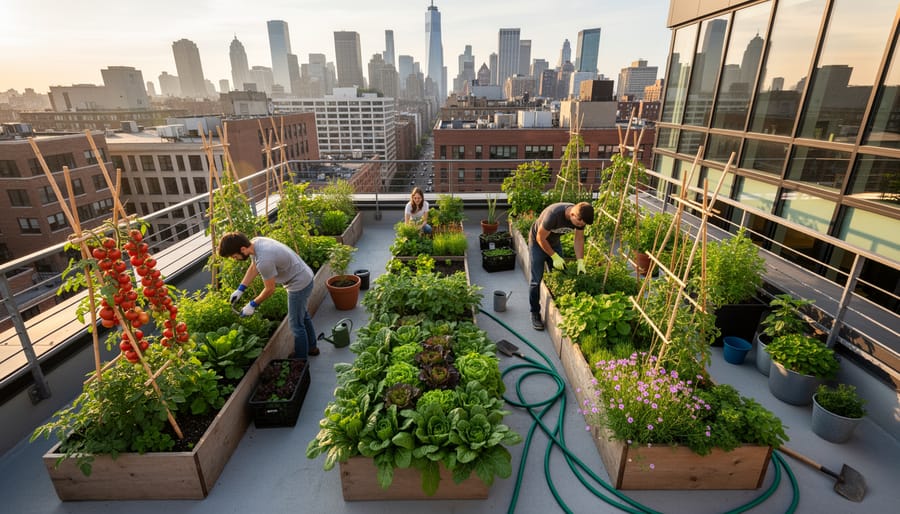
Urban rooftops and blank walls represent thousands of square feet of untapped potential in every city. When transformed into gardens, these overlooked surfaces deliver environmental benefits that ripple through entire neighborhoods.
A rooftop garden does more than grow tomatoes and herbs. The plants and growing medium insulate buildings, cutting cooling costs by up to 30 percent during summer months. Dark asphalt and concrete absorb heat, creating temperature spikes that make cities several degrees hotter than surrounding areas, but vegetated roofs reflect sunlight and release moisture through transpiration. Studies show green roofs capture runoff and reduce surface temperatures by 30 to 40 degrees compared to conventional roofs.
Vertical gardens work similarly on walls, fences, and trellises. Growing upward instead of outward makes productive use of limited ground space while creating privacy screens and wind barriers. A wall covered in climbing beans or cucumbers can transform a dull brick facade into a living tapestry that feeds families.
In 2024, we partnered with residents of a South Boston apartment building to convert their flat, heat-radiating roof into a community vegetable garden. Within three months, raised beds filled with lettuce, peppers, and cherry tomatoes were producing harvests. Residents who’d never met started coordinating watering schedules and sharing recipes. That 1,200-square-foot rooftop now yields over 300 pounds of fresh produce annually, provides habitat for urban pollinators, and has become the building’s most popular gathering space. The superintendent reports noticeably lower cooling bills for top-floor units, and neighbors from adjacent buildings have asked about starting their own rooftop projects.
2. Native Plant Landscaping: Supporting Local Ecosystems
Swapping out water-hungry lawns and high-maintenance ornamental plants for native species creates more than just visual interest, it rebuilds the ecological infrastructure your neighborhood depends on. Native plants evolved alongside local pollinators, birds, and beneficial insects, offering them the specific nectar, pollen, and habitat they need to survive urban pressures. When you plant New England asters, black-eyed Susans, or serviceberry shrubs instead of exotic imports, you’re establishing feeding stations and nesting sites that support entire food webs, turning your yard into a functional ecosystem rather than a biological desert.
The practical benefits extend beyond wildlife. Native plants develop deep root systems adapted to local soil and rainfall patterns, which means they thrive without constant watering, fertilizing, or pest control. Research shows that eco-lawns need less water and chemical inputs compared to conventional turf, and replacing grass entirely with native perennials takes that reduction even further. After an initial establishment period, a native garden largely takes care of itself, giving you year after year success without the weekend mowing and seasonal reseeding that traditional landscapes demand.
In urban settings where every green patch counts, native landscaping also builds resilience against climate extremes. These plants handle summer droughts, heavy rains, and temperature swings better than most cultivated varieties because they’re already adapted to New England’s variable weather. A street lined with native plantings cools the surrounding area, filters stormwater before it enters sewers, and provides corridors that allow wildlife to move between fragmented habitats, turning isolated yards into connected green networks that strengthen the entire community.
3. Rainwater Harvesting Systems: Turning Runoff into Resource
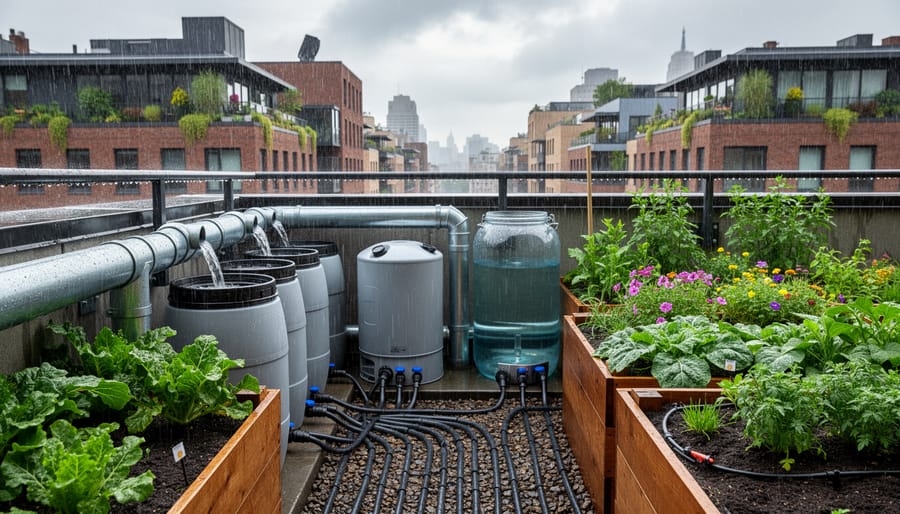
Urban spaces shed millions of gallons of rainwater every year, sending it straight into storm drains when it could be irrigating gardens, filling ponds, or recharging soil instead. Rainwater harvesting captures this free resource before it becomes runoff, turning a wasted opportunity into a sustainable water supply that benefits both your plants and the broader watershed.
A simple rain barrel at the end of a downspout is the entry point for most homeowners. These 50- to 80-gallon containers collect roof runoff during storms, providing enough water for container plants, raised beds, or spot watering during dry stretches. Installation takes an hour, costs under $100, and immediately cuts your reliance on municipal water for outdoor use. Position the barrel on cinder blocks to create gravity-fed pressure, attach a basic spigot, and you’ve created a self-refilling irrigation system that works all season.
Community gardens and larger properties benefit from cistern installations, above-ground or buried tanks ranging from 500 to several thousand gallons. These systems often include filtration, overflow management, and distribution networks that serve multiple beds or zones. The upfront investment is higher, but the payoff scales with size: a 1,000-gallon cistern can keep a quarter-acre garden watered through a typical summer dry spell without touching city water.
Beyond irrigation, harvesting stormwater helps reduce pollutant loading in nearby waterways by keeping runoff onsite rather than flushing contaminants into rivers and streams. Every gallon you collect eases pressure on aging urban infrastructure during heavy rain events, a benefit that compounds when entire neighborhoods adopt the practice.
4. Composting Programs: Closing the Nutrient Loop
Composting transforms kitchen scraps and yard waste that would otherwise sit in landfills into dark, nutrient-rich soil that breathes life back into urban gardens. When organic matter decomposes in landfills without oxygen, it releases methane, a greenhouse gas 25 times more potent than carbon dioxide. Composting that same material aerobically eliminates these emissions while building the fertile soil urban spaces desperately need.
Individual households can start with a simple backyard bin or worm composting system that fits on a balcony. You’ll divert roughly 30% of your household waste from the trash stream while producing free fertilizer for containers and garden beds. The process is straightforward: layer nitrogen-rich greens like vegetable peelings with carbon-rich browns like dry leaves, keep the pile moist, turn it occasionally, and wait three to six months for finished compost.
Community-scale programs amplify this impact. Last year, Urban Garden Boston partnered with a Dorchester neighborhood to install a shared three-bin composting system behind a community center. Thirty-seven households now drop off their food scraps weekly, contributing to a program that’s diverted over two tons of organic waste in just eight months. Residents take turns managing the bins, and each spring they share the finished compost to enrich their individual plots and shared garden spaces.
The system works because it’s accessible. Participants don’t need yards or special equipment, just a countertop collection container and a willingness to make weekly drop-offs. The community center hosts quarterly workshops where experienced composters mentor newcomers, troubleshoot common issues like odors or pests, and celebrate the tangible results: rich, earthy compost that grows healthier vegetables while reducing everyone’s environmental footprint.
5. Permeable Hardscaping: Letting Water Flow Naturally
Traditional concrete and asphalt create impermeable barriers that send rainwater racing into storm drains, carrying pollutants and overwhelming municipal systems. Permeable hardscaping flips this script by letting water soak naturally into the ground exactly where it falls.
Permeable pavers, porous concrete, and pervious asphalt create functional surfaces for walkways, patios, and even driveways while allowing water to filter through gaps or specially designed pores. A typical permeable driveway can infiltrate 5 inches of rainfall per hour, far exceeding most storm intensities, while a standard concrete version creates complete runoff. This infiltration recharges groundwater supplies, reduces flooding in low-lying areas, and filters out oil, heavy metals, and other contaminants before they reach waterways.
The ecological benefits extend beyond water management. Cooler surface temperatures compared to standard asphalt help counter urban heat island effects, and water reaching tree roots through permeable surfaces supports healthier street trees and landscape plantings. For community spaces, permeable pathways around garden beds prevent muddy conditions during rain while nurturing the soil ecosystem underneath.
Installation costs run 10-30% higher than conventional paving, but many municipalities offer stormwater fee reductions or rebates that offset the difference. Maintenance involves occasional vacuuming or pressure washing to prevent sediment from clogging pores, simpler than dealing with cracked, buckling pavement from freeze-thaw cycles that permeable surfaces better resist.
Whether you’re upgrading a backyard patio or working with neighbors to join community gardens with shared pathways, permeable hardscaping proves you don’t have to choose between functional surfaces and environmental responsibility.
6. Pollinator Corridors: Connecting Green Spaces
Urban pollinators face a critical challenge: they can find plenty of individual garden patches, but those isolated green spots often sit too far apart for efficient foraging. When a butterfly needs to travel half a mile between flower sources, it burns precious energy and faces predators, traffic, and other hazards. Pollinator corridors solve this by linking scattered gardens, parks, planters, and even street trees into continuous pathways of nectar and pollen sources.
These corridors work because they mirror natural landscapes where flowering plants cluster along streams, forest edges, and meadows. In cities, your front yard becomes the first link; your neighbor’s balcony planters connect to the community garden two blocks away, which flows into the native shrubs at the local park. Bees and butterflies travel these routes daily, moving from bloom to bloom without exhausting themselves crossing concrete deserts.
The real power of pollinator corridors emerges when entire neighborhoods coordinate their plantings. A single resident installing milkweed helps monarch butterflies, but when a dozen households on the same street do it, you create a reliable habitat that sustains breeding populations. This collaboration happens organically through conversations over fences, at farmers’ markets, or through community partnerships that organize planting events.
Start by planting native species that bloom at different times, spring crocuses and serviceberries, summer coneflowers and bee balm, fall asters and goldenrod. Talk with neighbors about extending those bloom times across properties. Even window boxes and tree pits contribute when they include pollinator-friendly plants. The corridor strengthens as more people participate, turning fragmented habitat into connected ecosystems where beneficial insects thrive year-round.
7. Organic Soil Building: The Foundation of Healthy Growth
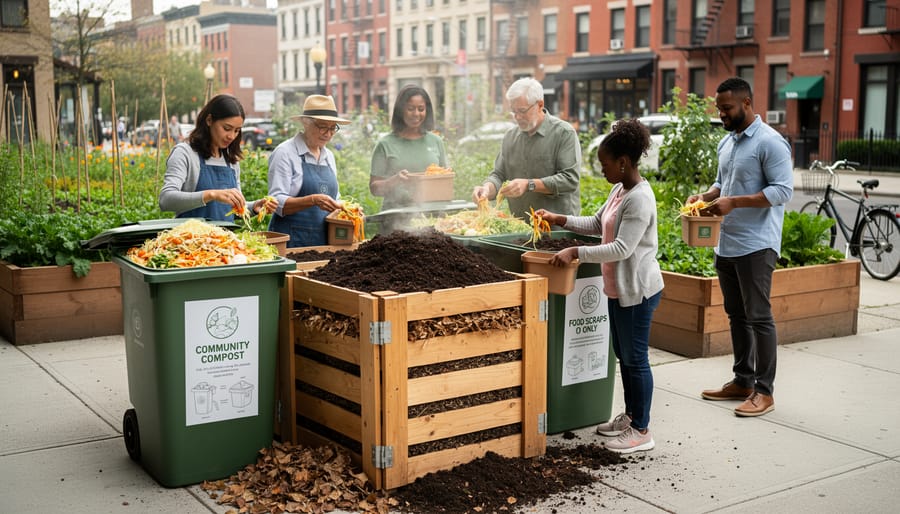
Urban soil typically faces severe degradation from decades of compaction, contamination, and nutrient depletion. Rebuilding that foundation represents one of the most powerful green eco solutions because healthy soil literally feeds every other sustainability effort you undertake.
Start by adding organic matter consistently. Finished compost, aged leaf mold, and well-rotted manure introduce beneficial microorganisms while improving soil structure. Aim to incorporate two to three inches of organic material into planting beds each year. This simple practice transforms dense, lifeless dirt into a living ecosystem capable of supporting vigorous plant growth. We’ve witnessed urban plots with initially barren soil produce abundant harvests within two growing seasons through dedicated organic matter addition.
Cover cropping takes soil building further by protecting and enriching ground during off-seasons. Sow clover, vetch, or winter rye in fall, then chop and turn these “green manures” into the soil before spring planting. The decomposing plants feed soil organisms while their roots break up compaction and prevent erosion. Even small garden spaces benefit from this technique between crop rotations.
Avoiding synthetic fertilizers and pesticides proves equally critical. Chemical inputs disrupt soil biology, killing beneficial fungi and bacteria that plants depend on for nutrient uptake. Organic approaches might work more slowly, but they build soil that functions independently over time rather than requiring constant intervention.
Healthy urban soil sequesters carbon, filtering it from the atmosphere and storing it underground. Each percentage point increase in soil organic matter also boosts water retention capacity significantly, reducing irrigation needs during dry spells. You’re not just growing plants, you’re creating a self-sustaining system that becomes more productive and resilient with each passing year.
Getting Started with Green Eco Solutions in Your Space
You don’t need to tackle all seven solutions at once. Pick the one that fits your current space, budget, and interests. If you’re renting a third-floor apartment with a balcony, start with a few containers of native plants or a simple rain barrel. Homeowners with yards might begin by replacing a section of lawn with pollinator-friendly natives. The key is taking that first step, because each green action creates ripple effects throughout your neighborhood.
Do I need gardening experience to start?
No experience is necessary. Many green eco solutions like rainwater harvesting or choosing native plants are beginner-friendly, and our community workshops provide hands-on guidance for those just starting out.
What if I only have a small balcony?
Small spaces are perfect for vertical gardens, container composting, or native pollinator plants. Even a few square feet can support biodiversity and reduce your environmental footprint.
How do I get my neighbors involved?
Start a conversation by sharing what you’re doing, invite them to see your space, or propose a shared project like a community composting bin or pollinator corridor that spans multiple properties.
What’s the most impactful first step?
Native plant landscaping delivers immediate benefits for pollinators, requires minimal maintenance once established, and inspires others when they see the results.
These solutions gain power when neighbors collaborate. A single rooftop garden is valuable, but a network of green roofs across a block dramatically reduces heat and manages stormwater. Pollinator corridors only work when multiple properties connect habitat patches. Reach out to your community garden, neighborhood association, or local sustainability groups to find others already working on similar projects. Urban Garden Boston offers consultations and workshops to help residents, organizations, and businesses implement these solutions together. Your participation strengthens the entire urban ecosystem, one transformed space at a time.