janet
An e-commerce partnership is a simple agreement between two or more businesses or groups to sell, promote, or ship products online together, so each side reaches customers it couldn’t reach alone. A neighborhood farm teams up with a local grocer’s website. A community garden shares an online storefront with a seed-swap group. A zero-waste shop bundles products with a nearby composting service. You don’t need a big budget or a tech background to start, just a clear idea of what each partner brings and a willingness to talk through the details.
Most small partnerships fall into a few models: shared storefronts, affiliate or referral deals, co-branded bundles, and delivery or fulfillment alliances. Each one splits the work and the rewards differently, and each suits a different kind of business. Picking the right one early saves headaches later.
This guide walks through those models in plain language, shares examples of how local partners have made them work, and lays out a beginner-friendly plan for getting started in your own community. We’ll also be honest about the hurdles, from splitting revenue fairly to keeping shipping sustainable, because knowing them up front is what keeps a good idea from stalling. If you’ve never sold anything online, you’re in the right place.
What E-Commerce Partnerships Really Mean for Local Businesses
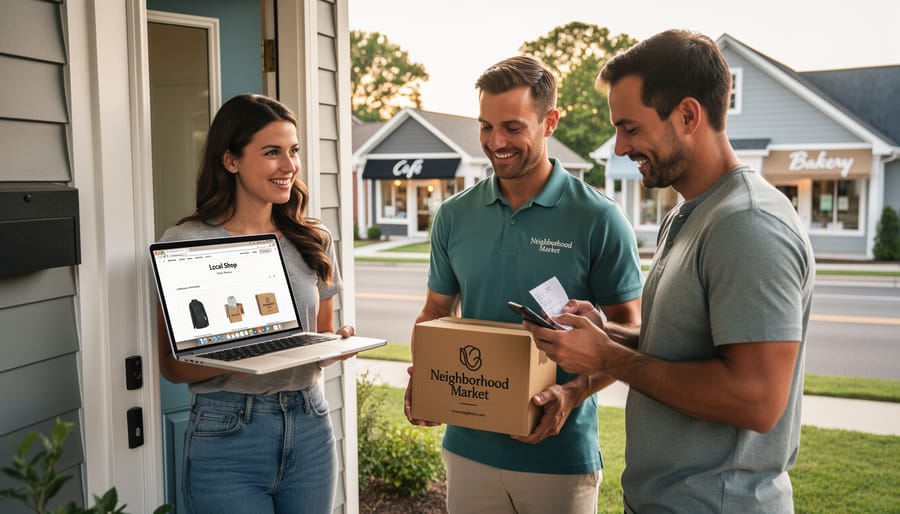
Why Going Local Beats Going It Alone
Selling online alone means paying for everything alone: the website, the photography, the shipping supplies, the ads. Partner with a neighbor and those costs get split. Three shops sharing one online storefront or one delivery route each carry a fraction of the load, and each one gets introduced to the others’ customers. That shared audience is worth more than it sounds, because people who already buy from the corner bakery are far more likely to try the farm stand down the street when the bakery recommends it.
That recommendation is the real advantage. Trust travels quickly between neighbors. When a familiar local business vouches for you, shoppers don’t need convincing the way they would with a stranger’s website.
It’s worth being honest, though: partnering takes time. You’ll spend hours talking through who handles what, how you’ll split sales, and what happens when an order goes wrong. Some of those conversations will show you that a particular match isn’t right, and that’s fine. A good partnership grows slowly, one small, successful project at a time, and walking away early from a poor fit saves everyone trouble.
Where Sustainability Fits In
When neighbors sell together, the greenest choices often get easier. Think of it as a bonus that comes with partnering, not a rulebook you have to follow.
Start with delivery. If three local businesses ship or deliver separately, that’s three vehicles on the same streets. A shared route, where one driver drops off a farm’s produce, a bakery’s loaf, and a maker’s candle in a single trip, cuts miles and fuel while also trimming each business’s costs. A shared pickup point works the same way, since customers collect everything in one stop.
Packaging is another easy win. Partners can agree on reusable crates, jars with a deposit, or a single return bin at the pickup hub. Buying boxes in bulk together also keeps materials simple and cheaper.
Then there’s the supply chain itself. Produce grown a few miles away doesn’t need long-haul refrigeration or layers of wrapping, and customers can often tell it’s fresher.
You don’t need to do all of this at once. Pick one change, like a shared delivery day, and build from there. Small steps still add up, especially when a whole neighborhood takes them together.
Types of Local E-Commerce Partnerships That Work
Shared Online Marketplaces and Pickup Hubs
Picture five neighborhood sellers, a bakery, a honey producer, a candle maker, a small farm, and a coffee roaster, all listing their goods on one shared website. Customers browse everything in a single cart, and each business only has to manage its own products. That’s the heart of a shared online marketplace.
Pickup hubs take it a step further. Instead of every seller arranging separate deliveries, orders get collected at one familiar spot, like a café, community center, or garden stand. Customers swing by once and leave with items from several makers.
The payoff is lighter workloads. Costs for the website, promotion, and logistics get split. Fewer delivery trips also means less fuel and less packaging waste. The tradeoff is coordination, so agree early on who handles customer questions and how sales are tracked.
Farm-to-Customer Subscriptions and Produce Boxes
Picture a half-acre lot turned into an organic growing space, with kale and herbs ready to harvest, and a local cafe that would happily buy them. The missing piece is usually the ordering, and that’s where a simple online setup helps.
A farm-to-customer subscription lets neighbors sign up for a weekly or biweekly produce box. Cafes and small grocers can order the same way, using a shared form or a basic store page. The farm picks a harvest day, collects orders ahead of time, and packs only what’s been requested, which cuts waste on perishable crops.
Start small. Offer one box size and one pickup point, maybe a partner shop that already has foot traffic. That shop gains visitors, and the farm skips a delivery run. Be honest with customers about seasonality, too. A box that changes with the weather builds trust faster than one that promises everything year-round.
Co-Marketing and Product Bundles
Co-marketing is the easiest way to start, because it asks you to share an audience rather than build a whole new system. Picture a garden workshop on growing herbs in small spaces, paired with a bundle of starter pots, soil, and seedlings from a nearby nursery. Attendees get everything in one order, and both businesses reach customers the other already has.
Product bundles work the same way. Three neighborhood makers, say a candle maker, a baker, and a ceramicist, can offer one gift box online instead of three separate listings. Customers love the convenience, and you split the promotion and the packing work.
Start simple. Agree on a price, who handles shipping or pickup, and how you’ll divide the revenue before you launch. A short written note covering those points can save awkward conversations later. Try one small bundle for a single season before committing to more.
Success Stories: Neighbors Growing Together Online

From Underused Lot to Local Supply Chain
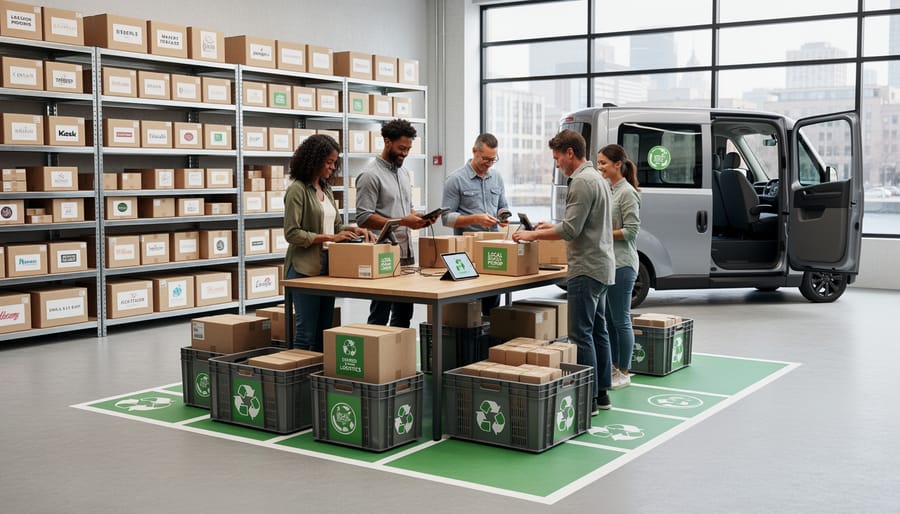
Picture a vacant corner lot, once a patch of gravel and weeds, now rows of kale, tomatoes, and herbs. On its own, that’s a lovely sight. But growing great produce is only half the story. The other half is getting it to people who want it.
That’s where local partnerships make the difference. An urban agricultural project can team up with neighborhood cafes, small grocers, and community organizations that are already hungry for fresh, organic ingredients. The cafe gets produce picked close to home, and the farm gets a dependable buyer. Neighbors see their money circulating right where they live.
Online ordering stretches that reach further. Instead of relying on foot traffic alone, a farm can post what’s ready each week, and partners or residents can reserve a share from their phones. A shared ordering form is enough to begin with, no fancy website required. Orders help the growers plan what to harvest, which cuts waste, and a single pickup day or shared delivery route keeps things manageable.
The lesson is simple. Underused land becomes a local supply chain when growers, buyers, and a little online convenience work together.
Small Shops, Bigger Reach
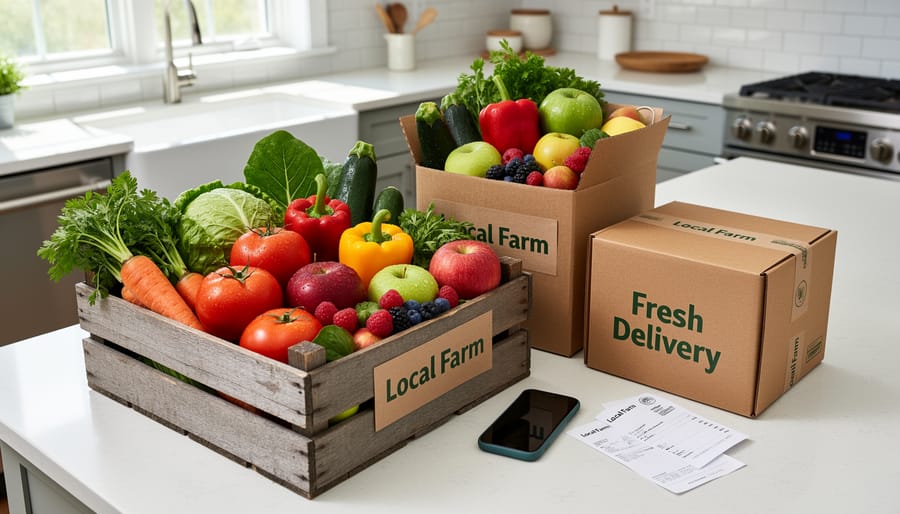
Picture a block with a bakery, a flower stand, a tea seller, and a candle maker. Each has loyal regulars but little time or money to run a polished website on their own. So they pool their resources. They build one shared online store, split the monthly cost four ways, and agree on a single weekly delivery run by a neighborhood courier.
Orders from all four shops go out in one trip, which trims fuel and packaging. One person handles photos and listings, another packs boxes, and a part-time driver covers the route. That is real, steady work created right in the neighborhood, and none of it requires any single shop to take on a big risk.
Customers get a simple, one-stop way to buy local, and the shops reach people beyond their usual foot traffic. If you want more ideas to borrow, these partnership business examples show how other communities have made similar teamwork pay off.
How to Start Your First Local Partnership
Finding Partners Who Share Your Values
The best partners are often people you already run into. Start at your local farmers market, where vendors share your customers’ values and sell products that sit nicely beside yours: a honey maker and a bakery, say, or a produce grower and a café. Neighborhood business associations are another good bet, since their members are already looking for ways to support each other.
Community organizations deserve a look too. If you’re curious about green spaces, you can join community gardens and meet growers, volunteers, and small sellers who care about the same things you do. Workshop attendees are worth a conversation as well, because anyone who shows up to learn about sustainable living is likely open to a fresh idea.
When you size up a potential partner, look for complementary products rather than competing ones, and for shared community goals like local jobs, less waste, and fresh food close to home. Those matter more than size. Start with a simple chat over coffee and see whether your customers would be glad to meet each other.
Choosing Simple Tools to Begin
You don’t need fancy software to start. Pick the simplest tool that fits what you and your partner can actually manage, and let it grow from there.
A shared online store is one option. Several businesses list products under one storefront, and a simple platform handles payments so nobody builds a site from scratch. It works well when you want a single place for customers to browse.
Social media collaborations cost nothing to try. Tag each other in posts, run a joint giveaway, or host a short live demo together. Your audiences overlap in useful ways, and you learn quickly what your neighbors respond to.
An ordering form is the most basic route. Customers fill out a form, you confirm by email or text, and they pick up at a shared spot. It suits small batches and perishable items, since you only prepare what’s been ordered.
Treat each of these as a starting point, not a verdict. Try one for a month, see what’s easy and what’s clunky, and switch if it isn’t working.
Common Challenges and How to Handle Them
Partnering sounds simple until the first tomato order arrives and nobody knows whose job it is to pack it. The hurdles are real, but most of them have practical fixes.
Inventory is the first snag. When two or three sellers share one online store, stock counts drift fast. A shared spreadsheet or a simple ordering form that all partners update daily goes a long way, and so does agreeing on a cutoff time so no one promises what isn’t on the shelf.
Perishables add pressure. Produce wilts, and a cafe’s pastry window is short. Try pre-order windows, small weekly drops, and clear pickup times so nothing sits around. Delivery works the same way: one shared route on a set day beats five separate trips, and a neighborhood pickup point can replace delivery entirely.
Then there’s the human side. Workloads are rarely even, and one partner can end up doing the packing, the posting, and the customer emails. Write down who handles what, and revisit it every month or two. Talk openly about expectations early, including how revenue is split, because small resentments grow quietly. Community groups have found ways to overcome common challenges like these through patience, clear roles, and starting small.
Here’s an honest look at what you’re weighing:
Pros
- Partners split costs like delivery, packaging, and website fees.
- You reach each other’s customers, which widens your audience quickly.
- Neighbors vouching for neighbors builds trust faster than ads do.
- Shared routes and pickup points can cut your environmental footprint.
Cons
- Coordinating schedules and stock takes ongoing time and communication.
- You give up some control over branding, pricing, and timing.
- An unreliable partner can affect your customers’ experience.
- Revenue sharing needs clear agreements to avoid friction.
None of this means partnering isn’t worth it. It means going in with eyes open, and a plan for the messy middle.
Keep Exploring: More Ways to Strengthen Your Local Network
Once your first partnership is humming, it helps to see what else is possible in your neighborhood. If you want to understand how sustainable thinking can reshape the spaces around your business, our guide to green eco solutions shows how everyday changes add up to thriving, connected communities. It’s a good next read if you’re curious about the bigger picture behind a partnership.
You’ll also find more at Urban Garden Boston on practical next steps. Our posts on urban farming consultations explain how to plan a growing project that can supply local partners with fresh produce. Our organic gardening workshop articles are worth a look if you’d like a shared event to promote with a neighboring shop. And our community garden project stories show how neighbors have built lasting relationships around a shared plot, which is exactly the kind of trust that strong local partnerships grow from.
Frequently Asked Questions About Local E-Commerce Partnerships
How much does it cost to start a local partnership?
Often very little. Many first partnerships run on free or low-cost tools like a shared social media account, an ordering form, or a basic online store. Your main costs are usually time, packaging, and a small payment-processing fee. Start with one simple offer, then add more as you learn.
How is revenue usually shared?
There’s no single rule, so agree on it in writing before you launch. Common setups include each business keeping the sales of its own products while splitting shared costs, or a small commission going to whoever hosts the store or pickup point. Keep the math simple enough that everyone can explain it in one sentence.
Do I need my own website?
No. If your partner already runs an online store or a shared marketplace, you can list products there. Plenty of beginners start with an ordering form or a social media shop. A site of your own can come later, once you know what sells.
How do I handle perishable products?
Plan around freshness. Take pre-orders so you harvest or bake to demand, set fixed pickup windows, and use a shared pickup hub so goods don’t sit around. Be clear about what’s available each week, and agree up front on what happens if an item spoils or an order falls through. Smaller, more frequent batches beat big ones.
What if a partnership isn’t working?
That happens, and it’s okay. Check in regularly, keep your expectations written down, and treat the first few months as a trial. If the fit isn’t right, you can part ways kindly and try another neighbor with products that complement yours.
Partnerships with local businesses make e-commerce more approachable, more sustainable, and a lot more rewarding. You don’t need a big budget or a tech team. You need a neighbor who shares your values and a willingness to try something small together.
So here’s your step for this week: reach out to one nearby business. A café, a nursery, a maker down the street. Say hello, mention what you sell, and ask how you might support each other online. That single conversation could grow into shared delivery, a joint bundle, or a new set of customers who already trust you.
Some of these partnerships won’t work out, and that’s normal. The ones that do tend to keep money, jobs, and goodwill close to home.
If you’d like to explore community-minded collaborations, Urban Garden Boston would love to hear from you. Let’s grow something together.