janet
janetArable farming transforms bare land into productive cropland, and this ancient practice is finding new relevance in cities across America in 2026. Picture vast fields of wheat, corn, or soybeans stretching to the horizon. That’s traditional arable farming. But here’s what makes it matter to you: the principles that work on thousand-acre farms can reshape how we grow food in urban spaces.
This spring, farmers in the Midwest faced their most challenging planting season in a decade, drawing national attention to soil health and sustainable growing methods. These conversations aren’t just for rural communities anymore. Urban dwellers are discovering that understanding arable techniques, from crop rotation to soil management, provides a blueprint for creating productive growing spaces on rooftops, in community gardens, and along formerly unused city plots.
The distinction is simple. Arable farming focuses on annual crops grown directly in soil, unlike orchards or livestock operations. Whether you’re managing a 50-acre field or a 50-square-foot garden plot, you’re working with the same fundamental relationship between soil, seeds, and seasons.
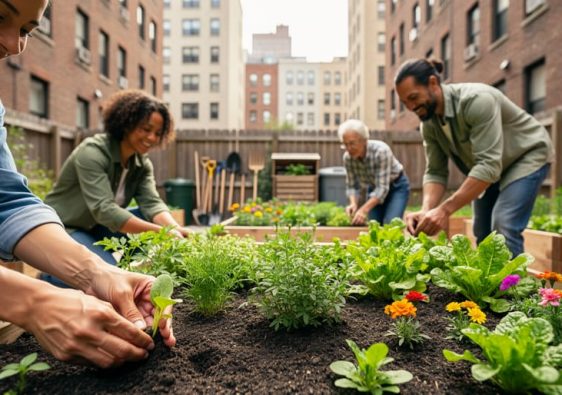
Boston’s own Victory Gardens Collective proved this connection last year when they applied traditional crop rotation schedules to their network of urban plots, increasing yields by 40 percent while reducing pest problems. Their success demonstrates how century-old farming wisdom adapts beautifully to contemporary city life. When neighbors share knowledge about soil preparation and planting schedules, they build a green community that feeds both bodies and relationships.
Understanding arable farming gives you practical tools to grow food sustainably, right where you live.
What Is Arable Farming and Why Does It Matter to Urban Growers?
Arable farming is the practice of cultivating land to grow crops, think wheat, corn, vegetables, and legumes, rather than raising livestock. It’s what happens in those vast golden fields you see from the highway, where farmers focus on preparing soil, planting seeds, managing growth, and harvesting produce. The term “arable” comes from the Latin “arabilis,” meaning plowable, and it represents humanity’s oldest agricultural approach: working the earth to feed communities.
For urban growers in 2026, these time-tested crop production principles are suddenly relevant again. Cities face increasing pressure to produce food locally, reduce transportation emissions, and build resilient food systems. The same techniques that maximize yields on rural farms, crop rotation, soil fertility management, efficient planting systems, can transform how we use rooftops, vacant lots, and community gardens. Instead of viewing urban agriculture as a separate category, forward-thinking growers are adapting arable methods to make small spaces produce more.
This renewed focus isn’t happening in isolation. Major agricultural events this year are spotlighting crop production innovation in ways that ripple into urban farming circles. Wageningen University & Research Open Crops in Lelystad hosted National Arable Farming Day 2026 on May 28th, bringing researchers and practitioners together to share cutting-edge techniques. The Western Canadian Crop Production Show is drawing attention to agribusiness advancements in arable farming. In Northern Ireland, the Arable NI 2026 Conference is scheduled for June 3rd at Legmore Farms, Moira, organized by CAFRE, the Ulster Arable Society, and Ulster Farmers’ Union.
These gatherings highlight a crucial point: arable farming isn’t stuck in the past. The principles are evolving with technology, sustainability research, and climate adaptation. For urban farmers, that means access to proven strategies refined over centuries, now updated for containers, raised beds, and intensive small-scale production. You’re not reinventing agriculture, you’re bringing field-scale wisdom home to the city.
The 2026 Arable Farming Renaissance: What’s Happening Globally
Something remarkable is happening in agricultural circles this year. Across three continents, major events are gathering farmers, researchers, and innovators to reimagine how we grow food, and the timing isn’t coincidental. These gatherings represent a genuine shift in how the farming community views crop production, with lessons that extend far beyond traditional field agriculture into urban spaces.
In late May, Wageningen University & Research Open Crops in Lelystad hosted National Arable Farming Day 2026 on Thursday, May 28th. This Dutch event brought together scientists and practitioners to explore cutting-edge approaches to crop cultivation, emphasizing sustainable intensification and precision farming methods that maximize output while protecting soil health. The research presented there offers a glimpse into techniques adaptable to any scale, from massive fields to city rooftops.
Just days later, on Wednesday, June 3rd, the Arable NI 2026 Conference took place at Legmore Farms in Moira. Organized by CAFRE, the Ulster Arable Society, and Ulster Farmers’ Union, this on-farm event provided hands-on demonstrations of real-world crop production challenges and solutions. The focus on practical, field-tested approaches makes the insights especially valuable for urban growers looking to apply proven methods in new contexts.
| Event | Date & Location | Key Focus |
|---|---|---|
| National Arable Farming Day | May 28, Lelystad, Netherlands | Research-driven innovation, sustainable intensification |
| Arable NI 2026 Conference | June 3, Moira, Northern Ireland | On-farm demonstrations, practical applications |
| Western Canadian Crop Production Show | 2026, Canada | Agribusiness, crop production technology |
Meanwhile, the Western Canadian Crop Production Show highlighted agribusiness innovations in arable farming, showcasing how technology and traditional knowledge combine to meet modern food production challenges. The emphasis on efficiency and adaptability resonates strongly with urban farmers facing similar resource constraints.
What ties these events together is their shared recognition that arable farming isn’t static. The principles that have fed nations for centuries are being refined, updated, and made more accessible. For urban growers, this renaissance matters because it validates intensive, soil-focused crop production as a path forward. The innovations discussed at these conferences, from advanced rotation strategies to soil fertility management, scale down beautifully to container gardens and community plots. You’re not just experimenting in your city garden; you’re part of a global movement rethinking how we grow food everywhere.
Arable Techniques That Work in Urban Spaces
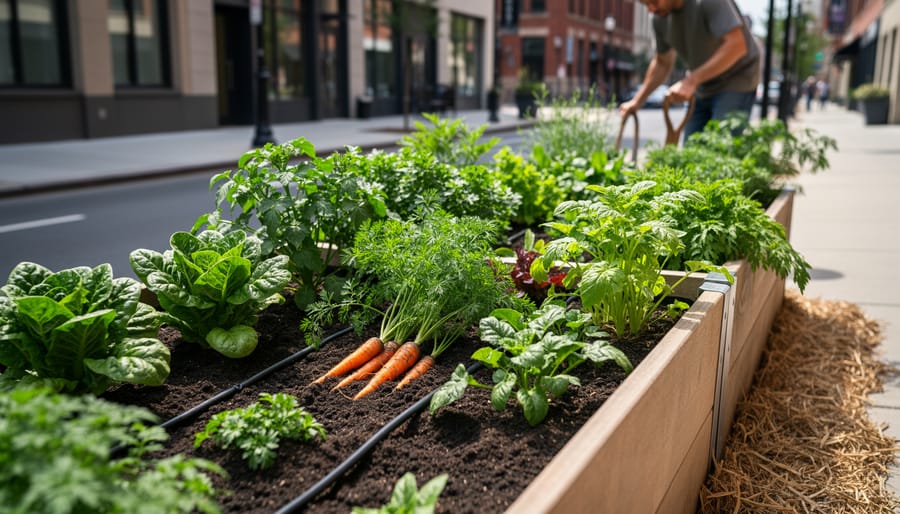
Adapting Crop Rotation for Container and Rooftop Gardens
Traditional crop rotation prevents soil depletion and disrupts pest cycles, but most guidance assumes you have acres to work with. In containers and rooftop gardens, you’re working with a few square feet, not fields. The good news? The principles scale down beautifully when you understand what you’re actually trying to achieve.
Crop rotation works by alternating plant families in the same growing space across seasons. Heavy feeders like tomatoes draw nitrogen from soil; follow them with legumes that replenish it. Deep-rooted crops break up compacted soil; shallow-rooted ones give it a rest. In a 4-by-8-foot raised bed or a collection of five-gallon containers, you can cycle through four plant families just as effectively as a commercial grower rotating wheat and barley across 100 acres.
Here’s how to set up a practical rotation for your urban space:
- Map your growing areas. Label each container or bed section (A, B, C, D works fine) and assign it to one of four plant families: legumes (beans, peas), brassicas (kale, cabbage, broccoli), nightshades (tomatoes, peppers, eggplant), or root vegetables (carrots, beets, radishes).
- Plant your first season according to your map. If space A gets tomatoes this spring, note it down.
- Next season, shift each family clockwise to the next space. Your tomatoes move from A to B, brassicas from B to C, and so on.
- Track what goes where using a simple notebook or phone photo. After four seasons, you’re back to the starting point, and the cycle repeats.
The timeline compresses in urban settings because you can often squeeze in two or three crops per year. A spring planting of peas (legumes) in a container can give way to summer lettuce (leaf greens, which fit into various families) and fall radishes (roots), effectively completing a mini-rotation in eight months. This accelerated schedule means your soil gets the benefits of diversity faster than a traditional field rotation.
Don’t let limited space discourage you from trying this. Even rotating just two plant families between two containers gives you meaningful pest control and soil health benefits compared to planting the same crop in the same spot year after year.
Soil Management: Bringing Field-Scale Practices to the City
Urban soil faces unique challenges that field farmers never encounter, compaction from foot traffic, contamination from decades of industrial use, and the physical barriers of pavement and concrete. Yet the same principles that keep commercial cropland productive for generations can transform city soils when adapted thoughtfully.
Start with the fundamentals: organic matter drives everything. Field farmers spread manure or incorporate cover crop residue to maintain 3-5% organic matter in their soils. You can achieve similar results in raised beds and containers by mixing finished compost into your growing medium at a 1:3 ratio. Vermicompost, produced from kitchen scraps in a worm bin, delivers concentrated nutrients and beneficial microbes in a form perfectly suited to small-scale production. Unlike industrial operations that apply organic amendments once or twice yearly, urban growers can work compost into their beds between successive plantings, steadily building fertility.
Soil structure matters as much as fertility. Traditional farmers avoid working wet soil to prevent compaction that destroys the air pockets roots need. Apply this wisdom by installing permanent paths around your beds and never stepping on growing areas. Use a broadfork instead of a rototiller to loosen compacted soil without destroying its structure. For rooftop and balcony gardens where weight is a concern, coconut coir mixed with compost creates a lighter growing medium that still maintains good structure and water retention.
Testing removes guesswork. Commercial growers test their fields every few years to track pH and nutrient levels. Urban soils often need more frequent testing, especially in areas with potential lead contamination. Your local extension office can test for both nutrients and heavy metals, providing specific recommendations for amendments. If tests reveal contamination, raised beds filled with clean soil offer a safe workaround, letting you grow food productively while keeping roots away from problematic ground soil.
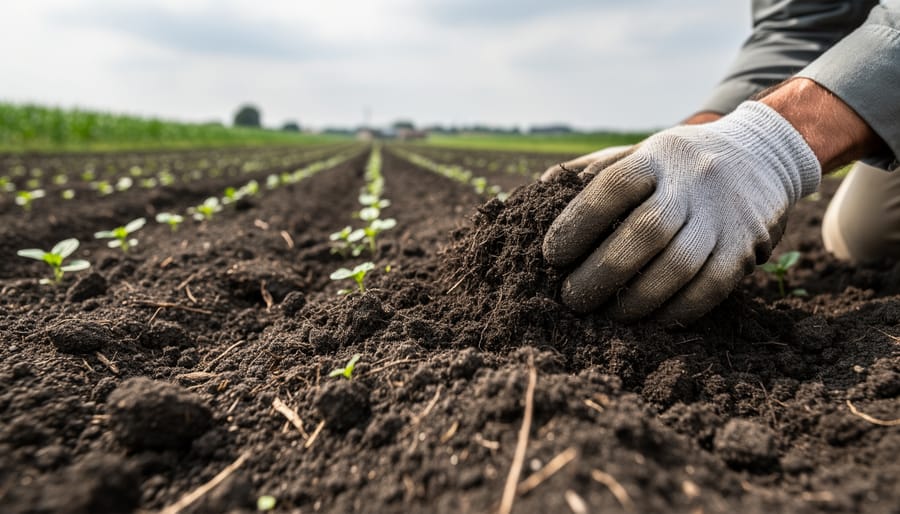
Success Story: How Boston Community Gardens Boosted Yields with Arable Methods
In spring 2025, the Roxbury Community Gardens collective faced a frustrating reality: after three seasons of scattered plantings and inconsistent harvests, their seven raised beds were producing barely enough vegetables to sustain a weekly farm stand. Soil in several beds had become depleted, pest pressure was mounting, and volunteer enthusiasm was waning. That’s when project coordinator Maria Chen attended a workshop on adapting commercial crop production techniques for urban agriculture in Boston and everything changed.
The transformation began with a simple shift borrowed from traditional arable farming: dividing their beds into four distinct zones and implementing a strict four-year crop rotation. Instead of planting tomatoes wherever space opened up, they grouped crops by family, nightshades in one zone, brassicas in another, legumes in a third, and root vegetables in the fourth. Each season, the entire planting pattern shifted one zone forward.
We went from guessing what to plant where to having a clear, repeatable system that actually built our soil instead of exhausting it.
Within two growing seasons, the results were undeniable. Tomato yields increased by 60 percent as disease pressure dropped dramatically, previously, early blight had been devastating crops in the same beds year after year. The legume zone, planted with bush beans and sugar snap peas, naturally enriched the soil with nitrogen, which the following year’s heavy feeders like squash and peppers put to immediate use.
The team also adopted field-scale cover cropping practices, planting buckwheat and winter rye in beds during off-seasons rather than leaving them bare. This simple addition increased organic matter by measurable amounts, soil tests showed a jump from 2.8 percent to 4.1 percent organic content over 18 months. Earthworm populations exploded, and the soil developed a darker, crumbly texture that held moisture better during Boston’s increasingly unpredictable summer weather.
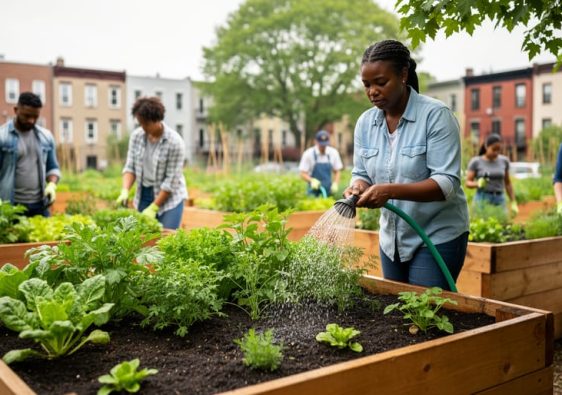
Perhaps most importantly, the systematic approach made volunteer training straightforward. New gardeners could quickly learn which crops belonged in which rotation group and why. The farm stand expanded from weekly to twice-weekly operations, and by harvest season 2026, the gardens were producing enough surplus to donate 400 pounds of fresh vegetables to the neighborhood food pantry. The community had learned that thinking like an arable farmer, planning rotations, protecting soil health, working with natural cycles, wasn’t just for rural fields. These principles scaled down beautifully to seven raised beds in the heart of the city.
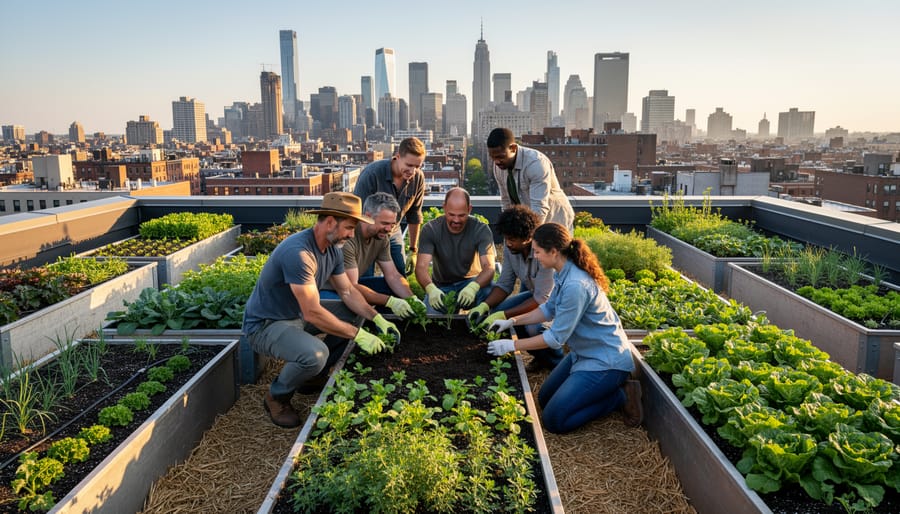
Overcoming Urban Challenges: Making Arable Farming Work in Small Spaces
Urban farmers eager to apply arable farming principles quickly discover that city environments present unique hurdles. Limited square footage, questionable soil quality, restricted water access, and local regulations can turn promising projects into frustrating roadblocks. The good news is that thousands of urban growers have already navigated these obstacles and found practical solutions that work within city constraints.
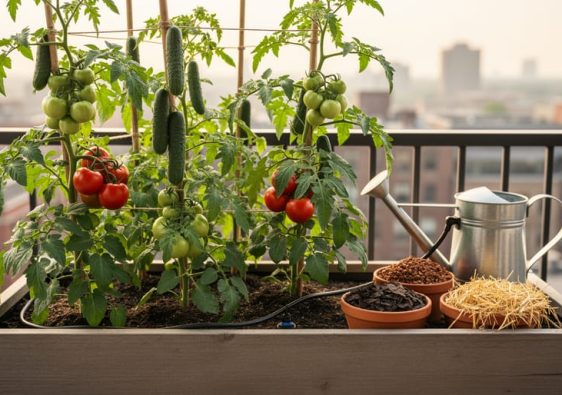
Space limitations top the list of challenges. While traditional arable farms measure productivity in acres, urban growers work in square feet. The solution lies in vertical thinking and intensive bed systems. Stacking growing zones through trellises, vertical planters, and rooftop installations multiplies usable space. Container systems allow crops to colonize balconies, fire escapes, and parking lots. A single 10×15-foot rooftop can produce meaningful harvests when managed with arable efficiency principles, careful crop selection, succession planting, and rotation schedules adapted to containers.
Soil contamination poses serious risks in older urban areas where industrial history left behind lead, heavy metals, and petroleum residues. Testing is non-negotiable before planting any edible crops. When tests reveal contamination, raised beds with imported certified organic soil provide a safe barrier. Some growers install impermeable liners beneath beds to prevent root contact with compromised ground. Others embrace container growing entirely, eliminating ground soil concerns while maintaining full control over growing media quality.
Water access challenges urban agriculture in two ways: insufficient supply during hot months and prohibitive costs in metered buildings. Rainwater harvesting systems capture free water from roofs and redirect it to storage tanks for irrigation. Solar-powered irrigation systems automate water delivery while keeping operating costs minimal. Drip irrigation reduces waste compared to overhead watering, stretching limited water budgets further. Community gardens often negotiate reduced water rates or install separate agricultural meters with municipalities.
Regulatory obstacles vary wildly by city. Zoning codes might prohibit certain structures, health departments may restrict produce sales, and homeowner associations sometimes ban visible food production. Research local ordinances before investing time and money. Many cities now have urban agriculture coordinators who can clarify rules and help navigate permits. Joining established community garden networks provides access to collective knowledge about what works legally in your specific area. Some restrictions ease when framed as educational or community-benefit projects rather than commercial operations.
Getting Started: Your First Urban Arable Project
Starting your first urban arable project doesn’t require acres of land or expensive equipment. You can begin with a backyard plot, a corner of a community garden, or even a collection of large containers on a rooftop. The key is applying arable principles, systematic crop planning, soil management, and rotation, to whatever space you have.
Begin by assessing your available area honestly. Measure your space, observe sunlight patterns throughout the day, and test your soil if you’re working with ground plots. Urban soils often contain contaminants, so a basic test kit from your local extension office can save frustration later. If you’re dealing with compromised soil or limited ground space, consider raised beds filled with quality soil mix as your arable plot.
- Evaluate your site’s sunlight, water access, and soil condition through direct observation and testing
- Choose three to four compatible crops that suit your climate and growing season, planning for succession planting
- Map out a simple rotation plan, dividing your space into sections that will rotate annually
- Prepare your soil by incorporating compost and organic matter to build fertility
- Plant your first crop according to seasonal timing, keeping detailed records of dates and varieties
- Monitor growth weekly, adjusting watering and noting any challenges for future planning
- Harvest systematically and immediately prepare the bed for the next crop in your rotation
Resources matter, especially when you’re learning. Connect with local urban farming networks and workshops to master urban gardening techniques adapted for city conditions. Many extension services now offer urban agriculture programs specifically addressing small-space crop production.
Start small and expand gradually. A 4×8 foot bed managed intensively using arable methods will teach you more than a sprawling, unplanned garden. Track what works, adjust what doesn’t, and build on your successes each season. The urban arable farmers seeing the best results in 2026 are those who treat even tiny plots with the same systematic approach that traditional arable farmers bring to their fields.
The principles behind arable farming have fed communities for centuries, and now they’re proving their worth in an entirely new landscape: our cities. Urban growers across Boston and beyond are discovering that these time-tested crop production strategies aren’t just for vast rural fields anymore. They work beautifully when adapted to rooftops, community plots, and vertical gardens.
What makes this moment particularly exciting is the wave of innovation happening right now. The 2026 agricultural conferences and on-farm events worldwide are showcasing breakthrough approaches to crop production, and urban farmers can tap into this knowledge immediately. Whether you’re managing a container garden on your balcony or working with local urban farming companies on larger community projects, arable techniques offer a clear path to better yields and healthier soil.
Ready to join this movement? Urban Garden Boston offers workshops and consultations designed specifically for city growers looking to implement these proven methods. Connect with your local community garden, attend an urban agriculture meetup, or start small with your own experimental bed. The knowledge is here, the community is growing, and your city needs more food producers. Let’s make 2026 the year Boston truly blooms.